


Jump to winners | Jump to methodology
Revealing the best schools in Australia for 2026 – and why academic results are the basis but not the ceiling for success
Every school leader will rightly tell you academic performance matters, but The Educator’s 5-Star Schools of 2026 have gone beyond pure exam results by putting in place leading-edge initiatives and inventive programs. Ask any of the 33 institutions recognised in this year’s report what actually sets them apart, and grades are only part of the answer.
Now in its second year, the 5-Star Best Schools report – proudly supported by the Australian Boarding Schools Association (ABSA) – builds on the inaugural 2025 5-Star Best Schools report, again recognising some of the best schools in Australia for combining strong academic outcomes with innovative approaches to student wellbeing, technology, inclusion and community that extend well beyond the classroom.
Nicole Dyson, founder and CEO of Future Anything, sees the same pattern across the sector: strong results remain essential, but they’re no longer the whole story of what makes a school exceptional.
That philosophy runs through this year’s winners. From a rural New South Wales public school built entirely around community-defined values, to a South Australian college using AI to give real-time feedback on wellbeing, five 2026 winners show that a 5-Star result starts with strong academics – and doesn’t stop there.
Methodology
Every entrant is judged against the same six criteria – no school clears the bar on strong academics alone. All six carry equal weight in the final assessment.
The scorecard
Every 5-Star winner clears the same six criteria. What makes each profile distinctive is where they lead from – the pillar each school built its whole approach around.
| School | Signature pillar | Also strong in | The number | Why it matters |
|---|---|---|---|---|
| Ballina Coast High School Values before scores | Diversity & inclusion | Safety & wellbeing |
0
mentions of NAPLAN, HSC or PISA in the community survey
|
Asked its community what a graduate should look like, then rebuilt the school around the answer: kindness, self-regulation, communication, collaboration and empathy. |
| Thomas More College Wellbeing as an equal partner | Safety & wellbeing | Technology in learning |
4×
a year, every student receives a full wellbeing-and-learning profile
|
Tracks wellbeing values alongside academic capability, reported four times a year – with AI now giving students real-time feedback on both. |
| Villanova College AI as a critical-thinking tool | Technology in learning | Holistic development |
35 yrs
running community partnership with the Philippines
|
Adopted AI within months of ChatGPT's public release, then built a whole teaching philosophy around questioning its answers rather than accepting them. |
| Kildare College A culture that grows enrolment | Student support | Extracurricular programs |
84%
enrolment growth since 2018
|
Built a student-centred model where every girl is known individually, and watched enrolment nearly double as families noticed the difference. |
| Yeronga State High School Success beyond the report card | Holistic development | Diversity & inclusion |
50+
nationalities represented among students
|
Treats students as active partners in shaping the school, not just participants in it, and maintains a global outlook that reaches more than 50 nationalities. |
For decades, Australian school rankings have leaned heavily on NAPLAN, HSC and PISA data. But according to Dyson, that measure alone no longer captures what separates a good school from an exceptional one.
“It’s not what students know; it’s what students can do with what they know,” Dyson says. A genuinely top school in 2026 treats human capabilities – critical thinking, creativity, communication and agility – as a complement, not a competitor, to content.
Dyson also points to teacher investment as a marker of top-performing schools. Schools doing this well build embedded professional growth plans and invite external experts to partner on change, rather than relying on one-off training days, so leadership capacity is grown deliberately rather than thrust upon early-career staff.
That link between wellbeing and academic performance is not just anecdotal. The Australian Education Research Organisation’s national evidence review on student wellbeing found that student wellbeing correlates with learning outcomes, citing New South Wales Department of Education analysis that identified a reciprocal relationship between student engagement and academic performance – each reinforcing the other over time.
Artificial intelligence has become one of the fastest-moving tests of this philosophy. Dyson describes the strongest schools as treating AI as “a horizontal enabler, not a discrete vertical” – asking what balance of analogue and digital work suits their teaching and learning, rather than adopting AI wholesale or banning it outright. For students, she says, responsible AI use means AI literacy – the ability to question, verify and improve AI-generated output rather than outsourcing thinking to it.
This approach mirrors national policy. The Australian Framework for Generative AI in Schools, approved by federal and state Education Ministers in October 2023 and updated following a 2024 review endorsed in June 2025, explicitly promotes AI literacy over prohibition, built around six principles spanning teaching and learning, human and social wellbeing, transparency, fairness, accountability and privacy and security.
This is the backdrop against which The Educator’s 5-Star Best Schools 2026 winners have built their programs – treating strong academic performance as the entry point, then building distinctive, values-driven and technology-conscious systems around it, in much the same way Australian schools more broadly are learning to adopt AI safely and effectively.
Ballina Coast High School is a public high school in regional northern New South Wales, recognised in The Educator’s 2026 5-Star Best Schools report for its community-defined, values-first approach to student success.
When principal Peter Howes arrived at the school in northern New South Wales in 2024, he found pockets of strong practice but a disconnect from the community it served. Rather than impose a new direction from the top, Howes ran an extensive consultation process, surveying students, teachers, parents and local businesses on one deceptively simple question: what do you want to see in a graduate of this school?
The answers reframed everything that followed. “Not one of them said we want to see a fantastic set of NAPLAN results, or HSC or any amazing PISA results,” Howes says. “Not to say those things aren’t important, but what the community overwhelmingly said... they wanted to see kindness, self-regulation, communication, collaboration and empathy.”
Those five values now sit at the centre of the school’s approach, delivered through a framework the school calls ‘Empowering Learners, Shaping Excellent Humans.’ Central to it is a daily ‘hub’ structure, where every student meets in a small group with the same teacher for all six years of secondary school – an intentional design choice to ensure no student goes unnoticed.
Howes points to comparable schools overseas as evidence that leaning into human values, rather than treating them as secondary to standardised testing, can support strong academic outcomes even in schools facing significant socioeconomic complexity.


That disadvantage is well documented. A 2023 performance audit by the Audit Office of NSW on regional, rural and remote education found “considerable gaps in access and outcomes” between rural and remote students and their metropolitan peers had persisted despite a decade of dedicated state strategy – the exact divide Howes says the school’s community-first approach is designed to counter.
Industry context · Ballina Coast High School
Share of Year 9 students needing additional support in reading, writing and numeracy, by background. Isolation compounds every other disadvantage.
That same philosophy shapes how staff and students address each other. “We are a first-name school,” Howes says – students call him Peter rather than “Mr Howes” or “Sir”, and staff use first names unless they choose not to. “Why let a mister or a miss get in the way of a quality relationship?,” he says, arguing that high expectations and close relationships were never in tension to begin with.
The school has also rebuilt its approach to discipline around restorative practice rather than suspension, training every staff member under Margaret Thorsborne, a leading restorative-conversation practitioner and published author in the field.
Responses scale with the severity of the incident. At the informal end, a classroom teacher might simply explain to a student the impact of their behaviour, drawing on the same vulnerable, human language Howes credits to researcher Brené Brown. More serious incidents escalate to a formally facilitated meeting involving the principal or deputy, the student, their parent, the affected student and their parent. Rather than being handed a punishment, the student who caused harm is asked to determine their own form of repair – anything from an apology to community service. “It’s very rare when we get to a formal restorative conversation that we don’t have tears, that we don’t have deep reflection from all around,” Howes says.
Independent research backs the approach: a 2024 Learning Policy Institute analysis of restorative practices in schools found that increased exposure to restorative practices improved standardised English and maths results while reducing suspension rates, and a separate randomised trial by RAND Corporation found restorative programs reduced suspension rates in the district studied.
The shift was prompted directly by community feedback. An annual ‘pulse check’ survey found that victims of bullying or conflict often felt unheard and unrepaired under the school’s previous approach – a gap Howes set out to close. The same restorative processes are now used with staff, not just students.
Students, too, have been brought further into the decision-making process. “For far too long, we’ve done education to students, not with them,” Howes says. Student representatives now sit in on executive meetings to help resolve major challenges facing the school, including how to approach assessment in an AI-enabled classroom.
On technology, Howes describes a deliberate, staged approach. “We’re leaning into AI and digital tech literacy, not to be too prohibitive... but rather trying to prepare our young people with a graduated release of the tools as they neurologically develop,” he says.
Even something as simple as breakfast reflects the same philosophy. The school’s Breakfast Club is open to every student regardless of circumstance, “so we get everyone set up for their learning in the day,” Howes says – part of what he describes as treating every student with unconditional positive regard, “no matter what they did the day before.”
Howes is candid that the recognition sits within a broader public education system he believes is underappreciated. “We have such quality educators in public education, and this school is just one example of this,” he says, noting there are more than 350 public secondary schools in New South Wales serving students from every background without discrimination.
Asked what else he’d want readers to know, Howes is quick to deflect credit from his own school specifically. “I don’t consider our school to be special in any way,” he says, framing Ballina Coast’s recognition as one example among many public schools doing similar work across the state.
Inside the profiles · Ballina Coast High School and Villanova College
At two of this year's winners, discipline runs on repair, not punishment. The response scales with severity, and the student who caused harm decides how to make it right.
Q: What was the first thing you noticed when you became principal?
A: There was a disconnect between the school and the community. We ran extensive consultation processes and surveying, including students, teachers, parents and businesses.
Q: What did that consultation reveal?
A: The community wanted graduates to show kindness, self-regulation, communication, collaboration and empathy – not simply strong test results.
Q: How has that shaped the school day-to-day?
A: Every student is part of a small hub group with the same teacher for all six years of secondary school, and we’ve moved from doing education to students, to doing it with them.
Q: How do you approach AI in the classroom?
A: We’re leaning into AI and digital tech literacy, not being too prohibitive, but preparing young people with a graduated release of the tools as they develop.
Q: How does a restorative conversation actually work?
A: The bigger the behaviour, the more likely I am to be involved – from a classroom teacher having a conversation about impact, through to a formalised meeting with the student, their parent, the affected student and their parent, where the student determines their own way to repair the relationship.
Thomas More College is a co-educational Catholic secondary school in Salisbury Downs, South Australia, recognised as a 2026 5-Star Best School for integrating student wellbeing with academic achievement through a structured, AI-supported learner-profile system.
For principal Corey Tavella, now in his eighth year leading the South Australian Catholic school, the atmosphere he wants students and families to feel comes down to one formula. “High challenge, high support equals personal best,” he says. “It’s a comfortable atmosphere, it’s a positive atmosphere, but it’s not a permissive or passive atmosphere.”
That philosophy underpins Thomas More College’s most distinctive initiative: a learner profile that represents student achievement beyond the traditional report card. Four times a year, students receive a profile that places ‘learner behaviours’ – the school’s term for capabilities such as critical thinking – front and centre, with a wellbeing report alongside it.
“We plan, teach, assess and talk about and feedback on wellbeing and learning alongside academic achievement,” Tavella says. “If you’re looking for a formula: wellbeing plus learning equals academic achievement.” That formula has backing beyond Thomas More’s own results – the Australian Education Research Organisation has found wellbeing and learning outcomes are closely linked nationally, with improvements in each tending to reinforce the other, a pattern also explored in The Educator’s own analysis of what makes a student wellbeing program genuinely effective.
Every wellbeing value and learner behaviour, Tavella is careful to note, is designed to be attainable irrespective of disability, ability, giftedness or background – a deliberate choice for a school he describes as serving a low socioeconomic and highly diverse community. Thomas More is the most culturally diverse school in Catholic Education South Australia’s 101-school network, with 56% of students learning English as an additional language or dialect, representing 62 different cultures.
The school has built a shared language around its values – words like ‘striving’ and ‘connected’ have specific, teachable descriptors that both students and staff can apply to any subject. AI now plays a growing role in bringing that system to life: staff can log observable student behaviours in real time, giving families instant visibility into progress rather than waiting for a periodic report.
One recent example illustrates the school’s pragmatic approach to AI at scale. A staff member built an AI agent to give Year 12 students individual drafting feedback, loading it with the subject’s chief assessor report, the subject outline, performance standards, and exemplar responses ranging from A-plus to C-minus. The tool now gives all 70 students across the school’s largest Year 12 course – spread over three classes – individual feedback on their drafts, work Tavella estimates would otherwise take a teacher three weeks.
Inside the profile · Thomas More College
Principal Corey Tavella's team built a Year 12 drafting-feedback tool from four existing documents — no new data, just smarter use of what the school already had.
Tavella describes the framework guiding this work as resting on three tenets: AI should enhance already good work rather than replace it, preserve what he calls ‘productive struggle’, and provide only a reasonable first draft for students and staff to refine together. “We’re probably not groundbreaking in a technological sense, but we don’t claim to be – we’re trying to be groundbreaking in a teaching and learning sense,” he says.
That framework sits comfortably within the Australian Framework for Generative AI in Schools, the national policy promoting exactly this kind of structured, human-supervised AI use over either prohibition or unrestricted adoption.
Academically, the school notched record results last year, including a governor’s commendation.Tavella is equally quick to point to two students with intellectual disabilities who achieved their Year 12 certification in the same period – evidence, he says, of the school’s ‘excellence for all students’ philosophy extending across the full range of achievement.
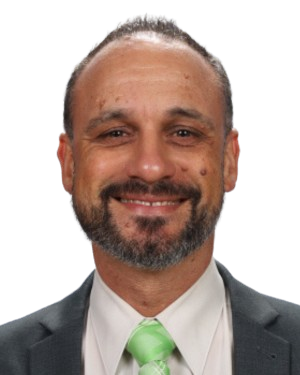
That trust extends to how the school engages its broader community. Thomas More sits within the Catholic Education South Australia system of 101 schools, and its scale of diversity – 56% of students identified as EALD, representing 62 different cultures and languages – could just as easily be a source of disconnection as connection. Instead, the school has built what Tavella calls ‘implicit trust’ by celebrating that diversity outright. Harmony Day, the school’s biggest day of the year, sees students arrive in traditional dress alongside multicultural food and performances – what Tavella describes as the cornerstone of how the school engages with its community.
A 15-year master plan is now underway to complete the school’s physical transformation – what Tavella describes as the second half of a rebuild the school is already halfway through. “We’ve done half, and this will be the other half,” he says, framing it as work that will outlast his own tenure but set the school up for the long term.
Q: What atmosphere are you trying to create at Thomas More College?
A: High challenge, high support equals personal best. It’s a comfortable, positive atmosphere, but it’s not permissive or passive.
Q: What makes your learner profile system different from a normal report card?
A: We plan, teach, assess and give feedback on wellbeing and learning alongside academic achievement – wellbeing plus learning equals academic achievement.
Q: How do you make sure these values apply to every student, regardless of ability?
A: All of these values from a wellbeing and learning sense are attainable and can be taught and assessed, irrespective of disability, giftedness or background.
Q: How has AI changed the way you support students?
A: One of our staff built an AI agent using the chief assessor’s report, subject outline, performance standards and exemplar grades to give all 70 students in our largest Year 12 course individual drafting feedback – work that would otherwise take a teacher three weeks.
Q: What role does the school’s diversity play in how it builds trust with families?
A: We are the highest and most diverse school in our system of 101 schools, and we’ve built implicit trust partly because we embrace and celebrate those many cultures – Harmony Day is the biggest day of our year.
Villanova College is an all-boys Catholic school in the Augustinian tradition in Coorparoo, Brisbane, recognised as a 2026 5-Star Best School for its early, structured adoption of AI as a critical-thinking tool rather than a shortcut.
Principal Paul Begg describes the defining experience of a Villanova education in a single word: community. “What we want is for the kids to get that sense of belonging and that sense of a bigger purpose,” he says. “We don’t just want kids to get great academic results. I mean, that’s obviously a goal of ours, but we need them to be really strong people for society in the future.”
That ambition is built into what the school calls a model of relational pedagogy, anchored around values including community, ‘the restless search for truth’ – an emphasis on questioning and critiquing information – and interiority, the development of an inner self through reflection. Discipline and pastoral care are shaped by the same idea, using restorative practice rather than punitive measures – an approach independent research, including studies from RAND Corporation and the Learning Policy Institute, has linked to both reduced suspensions and improved academic outcomes when sustained over time.
For students growing up immersed in social media, Begg says that ‘restless search for truth’ has taken on new weight. “Our truth is delivered to us through an algorithm... if our young people, and our adults and our teachers, don’t look to question the information that’s given to us... then we get ourselves in trouble,” he says.
That same instinct shaped the school’s early approach to AI. Villanova embraced the technology within months of ChatGPT’s public release in late 2022, rather than restricting it – well ahead of the Australian Framework for Generative AI in Schools, the national policy that would later formalise the same AI-literacy-over-prohibition approach. “We didn’t turn away from it. We didn’t ban it,” Begg says. “What we have to make sure is that students understand exactly what AI is and what it delivers. They still need to go to alternate sources. They still need to question what comes back.”
Villanova’s approach to character development is distilled into the GREATS model – Growth, Respect, Effort, Accountability, Teamwork and Service – which staff use as a common reference point in conversations about both student achievement and behaviour.
Begg says the model earns its place because it turns abstract values into something usable in the moment. “Every action has a link back to our GREATS model,” he says – whether that’s a conversation about growth after a success or unpacking where a lapse in effort or accountability led to a mistake. “It’s simplistic in many ways, but it’s actually very effective, and young people understand it.”

That ethos extends well beyond the classroom. Villanova’s Year 7 students make sandwiches every Friday morning to hand out to people experiencing homelessness in a local park, and senior students volunteer at Emmanuel City Mission, a homeless shelter near the school. The college’s longest-running community commitment is to the Philippines, where it has provided educational scholarships for 35 years through the Australian Filipino Solidarity Movement, with staff and students visiting the country annually as part of that ongoing relationship.
Closer to home, a student-run ‘green team’ maintains and educates on Norman Creek, a waterway near the school, as part of the college’s broader environmental sustainability work.
Begg says the school’s approach to teaching mirrors its approach to truth: participatory rather than one-directional. “The teacher merely works inside the classroom with the students to guide towards learning and wisdom. They don’t hold all the learning and wisdom – they’re there to explore it with the students,” he says.
Q: What do you want students, parents and teachers to experience at Villanova?
A: The Villa experience is very much one of community – that sense of belonging and a bigger purpose is the foundation of the education we offer.
Q: How do you teach values that can feel intangible?
A: It has to be about how the entire college operates and how all our teachers engage with students. We run off a model of relational pedagogy.
Q: Why did Villanova choose to embrace AI early rather than restrict it?
A: We didn’t turn away from it or ban it. Students still need to go to alternate sources and question what AI gives back.
Q: How would you describe your approach to teaching?
A: The teacher works inside the classroom with students to guide them towards learning and wisdom, not to hold all the answers.
Q: How does the GREATS model help students navigate setbacks?
A: You can take a great success or a failure and work through growth, respect, effort, accountability
Kildare College is an all-girls Catholic school in Adelaide, recognised as a 2026 5-Star Best School for a student-centred culture that has driven significant enrolment growth.
“We are never satisfied with standing still,” is how principal Tina Neate sums up the Adelaide all-girls Catholic school’s approach in a single sentence.
Over the past 12 months, Neate points to the Girls’ Achieve Program, expanded student leadership opportunities and continued investment in curriculum across STEM, performing arts and creative industries as evidence of that mindset. The college is also midway through its next major infrastructure project, the Lightbridge Centre – a $22 million performing arts and wellbeing facility designed with input from students, building on the Performing Arts curriculum that includes the college’s Special Entry Dance program.
“Every decision is made with our students at the centre,” Neate says. “What do our students need? What will prepare them for the future? How can we make Kildare even better than it was yesterday?”

That question has translated into significant enrolment growth – from around 435 students in 2018 to almost 800 today – which Neate attributes to families trusting the school to know and support their daughters individually. “Students know they are valued not because of their results, but because of who they are as people,” she says. “At the same time, they are challenged to achieve more than they thought possible.”
That growth mirrors a broader transformation Neate has overseen. In under a decade, Kildare’s enrolments have almost doubled, facilities have been reimagined, academic results have strengthened, and staff engagement has been recognised nationally. Neate credits much of that to the culture underpinning it.
“The culture and sense of community at Kildare is one of our greatest strengths,” she says. Families, she adds, “appreciate how approachable our staff are and how well we communicate,” while staff describe a strong sense of purpose in the work.
The college’s facilities reflect that same design philosophy. The Brigidine Centre, opened in 2019, anchors community gatherings, sport and the Performing Arts curriculum through a purpose-built dance studio and music rooms; the Tullow Centre, opened in 2022, created dedicated spaces for STEM, design, digital technologies, woodwork and metalsmithing. The forthcoming Lightbridge Centre continues that pattern, with student feedback shaping the design of the new performing arts and wellbeing space.
On technology, Neate describes a considered approach to AI that balances innovation against the fundamentals of learning. “We believe schools have a responsibility to prepare students not simply to use technology, but to use it wisely,” she says. Through workshops and professional learning, staff and students are exploring how to use AI effectively while considering ethics and understanding when it should support human thinking rather than replace it.
Neate is careful to frame the college’s growth as only one measure of success among several. Kildare has also strengthened its academic results, including strong South Australian Certificate of Education (SACE) outcomes, and has twice been recognised nationally by The Educator – first as a 5-Star Employer of Choice, and now as a 5-Star Best School in 2026.
“None of those achievements define success on their own,” Neate says. “Success is seeing a student who arrives in Year 7 graduate as a confident and independent young woman who believes she can make a difference.” That framing echoes the Australian Education Research Organisation’s national evidence review on student wellbeing, which found a sense of being known and valued is itself linked to stronger academic engagement over time.
Neate returns often to the trust she says underlies all of it. “Every morning, almost 800 young women walk through our Kildare College gates,” she says.“They place their trust in us, and so do their families. That trust is something we never take for granted.”
Asked to describe the college in three words, Neate settles on: ‘Courageous. Innovative. Connected.’
Q: Over the last 12 months, what initiative has had the most significant impact?
A: We have strengthened student wellbeing through our Girls’ Achieve Program, expanded opportunities for student voice and leadership, and continued to invest in curriculum development, including STEM, Performing Arts, Creative Industries and future-focused learning.
Q: What do you feel Kildare offers that other schools may not?
A: Everything is intentionally connected and our college is student-centred. Students experience academic excellence, outstanding wellbeing support, exceptional learning opportunities and genuine connections all in one place.
Q: What particular facilities help the school stand out?
A: The Brigidine Centre and Tullow Centre have created outstanding opportunities in the arts and in STEM, design and technology – and our new Lightbridge Centre continues that, with our students’ perspectives shaping the design.
Q: What is the school’s position on AI?
A: Our approach is one of balance – embracing innovation while recognising that relationships, critical thinking, creativity and human connection remain the heart of learning.
Q: What’s been the biggest challenge over the past year?
A: Ensuring that we continue to grow without losing what makes Kildare special. Growth should never come at the expense of knowing our students.
Q: If you could pick three words to describe your school, what would they be?
A: Courageous. Innovative. Connected.
Yeronga State High School is a co-educational public high school in Brisbane, recognised as a 2026 5-Star Best School for its internationally connected, student-voice-driven approach to education.
As principal of a school with true global connections, Ben Orford points to Yeronga State High School’s International Program as the clearest evidence of what sets the school apart. Now one of Queensland’s largest programs of its kind for a school of its size, it led to Yeronga’s selection as the Saitama Global Student Program school for 2026 – a Queensland Government exchange initiative with Japan’s Saitama prefecture, and an honour Orford says recognises the global connections its students and community have built.
“The strategy has been to create authentic global learning opportunities where students do not simply learn about the world, but experience it,” Orford says.
That same emphasis on lived experience runs through the school’s approach to student voice. “Students are not simply participants in their education; they are active partners in shaping the school,” Orford says, describing the approach as nationally recognised. Yeronga’s diversity – more than 50 nationalities represented among students – is treated as a defining strength rather than a challenge to manage. “We provide personalised, quality pathways that support every student to find success in their own way,” he says.
Despite being an inner-city school, Yeronga has maintained extensive green space that Orford says gives students room to ‘learn, connect and thrive,’ with facilities continually enhanced to stay contemporary while preserving the school’s community feel.
On technology, Orford describes AI as a tool the school is walking alongside rather than resisting. He says, “Our role is to walk alongside this change. We focus on developing digitally capable learners who can use technology responsibly, critically and creatively.”
Orford is direct about what he considers the true measure of the school’s success. “Success is far more than academic achievement,” he says. “It is about ensuring every student has access to opportunities, experiences, relationships and support that build acceptance, knowledge, skills and confidence.” He adds that success means students leaving Yeronga ‘equipped to choose and pursue pathways that are meaningful to them.’
The school’s biggest challenge over the past year, Orford says, has been managing significant enrolment growth while preserving the personalised support that defines Yeronga – something he has approached through strategic planning, investment in leadership capacity and strengthened wellbeing structures.

Asked to describe the school in three words, Orford chooses: ‘Connected. Inclusive. Excellence.’
Q: What initiative has had the most significant impact over the past 12 months?
A: Our International Program has continued to thrive, becoming one of Queensland’s largest programs of its kind for a school our size. For 2026, we were selected as the Saitama Global Student Program school – a real honour.
Q: What does Yeronga offer that other schools may not?
A: Our strong focus on student voice is a defining feature. Students are active partners in shaping the school, not simply participants in their education.
Q: How does the school approach AI and technology?
A: We focus on developing digitally capable learners who can use technology responsibly, critically and creatively, viewing it as a tool that complements quality teaching.
Q: What’s been the biggest challenge this year?
A: Responding to significant growth while maintaining the quality and personalised support that defines Yeronga.
Q: How would you describe the school in three words?
A: Connected. Inclusive. Excellence.
Q: What does the school’s diversity add to student life?
A: Our diversity is one of our greatest strengths, with students from more than 50 nationalities bringing unique experiences and perspectives, and we provide personalised, quality pathways that support every student to find success in their own way.
Across all five schools, a consistent theme emerges: the technology and pedagogical shifts underway today are being treated as permanent fixtures of school life, not temporary trends. Dyson expects the schools succeeding over the next 12 to 24 months will be those that resist treating AI as a discrete add-on and instead build clear pedagogical frameworks that apply whether content is generated by a teacher or a machine.
Equally, several principals point to community and industry partnership as an area set to deepen further. Dyson describes this shift as one ‘from audience to partnership’ – where parents, community members and industry professionals move from passive recipients of school communications to active contributors inside the curriculum itself.
For schools serving complex or disadvantaged communities, Howes’s experience at Ballina Coast suggests that the values driving 5-star recognition – rather than being a ‘nice to have’, layered on top of academic results – may increasingly become the primary lever schools use to lift engagement and, in turn, academic performance itself.
None of the five schools profiled here treat academic performance as optional – strong results remain central to how each defines its own success. What distinguishes them is a shared refusal to stop there. Whether through Ballina Coast’s community-defined values, Thomas More’s integrated wellbeing-and-learning model, Villanova’s early and considered embrace of AI, Kildare’s student-centred culture, or Yeronga’s investment in student voice and global connection, each school has built something deliberate around its academic core, rather than leaving it to chance.
As Dyson puts it, it is not simply what students know, but what they can do with it – and, increasingly, who they become while learning it. That, more than any single metric, appears to be what earns a school its place among the best schools in Australia.
Q: What is The Educator’s 5-Star Best Schools report?
A: It’s an annual report from The Educator that recognises Australian schools demonstrating outstanding performance and innovation across student learning and wellbeing, based on a detailed survey of school leaders and educators.
Q: What makes a school one of the best schools in Australia in 2026?
A: Based on this year’s winners, the best schools in Australia combine strong academic results with deliberate, values-driven programs – such as community-defined graduate values, integrated wellbeing models and structured AI-literacy frameworks – rather than relying on exam results alone. Selection and eligibility
Q: How were the 2026 winners selected?
A: School leaders and education professionals completed a detailed online survey covering six core pillars: innovative extracurricular programs, comprehensive student support, safety and wellbeing initiatives, technology in learning, diversity and inclusion, and holistic student development. The Educator’s editorial and research team then evaluated all eligible entries based on overall impact, originality and demonstrated commitment to student success.
Q: Do 5-Star Best Schools have to be private or fee-paying?
A: No. The 2026 list includes government, Catholic and independent schools, including several serving rural and lower socioeconomic communities.
Q: Does winning mean a school no longer needs to focus on academic results?
A: No. Every school profiled in the 2026 report continues to prioritise strong academic outcomes; the recognition reflects what schools do in addition to, not instead of, academic performance. Technology and AI approach
Q: What role does AI play at these schools?
A: Rather than restricting AI, most of the 2026 winners have built structured frameworks for its use – teaching students AI literacy and critical evaluation of AI-generated content, rather than banning the technology outright.


The Educator’s second annual 5-Star Best Schools report recognised Australia’s most forward-thinking and impactful schools. School leaders, administrators and education professionals completed a detailed online survey, and The Educator’s editorial and research team evaluated all eligible entries based on both measurable outcomes and the strength of each school’s narrative, with final selections made on overall impact, originality of programs and demonstrated commitment to student success. A total of 33 schools were awarded 5-Star Best Schools status in 2026.
The six core pillars
Innovative extracurricular programs
Comprehensive student support
Safety and wellbeing initiatives
Technology in learning
Diversity and inclusion
Holistic student development
The 5-Star Best Schools report is proudly supported by the Australian Boarding Schools Association.