



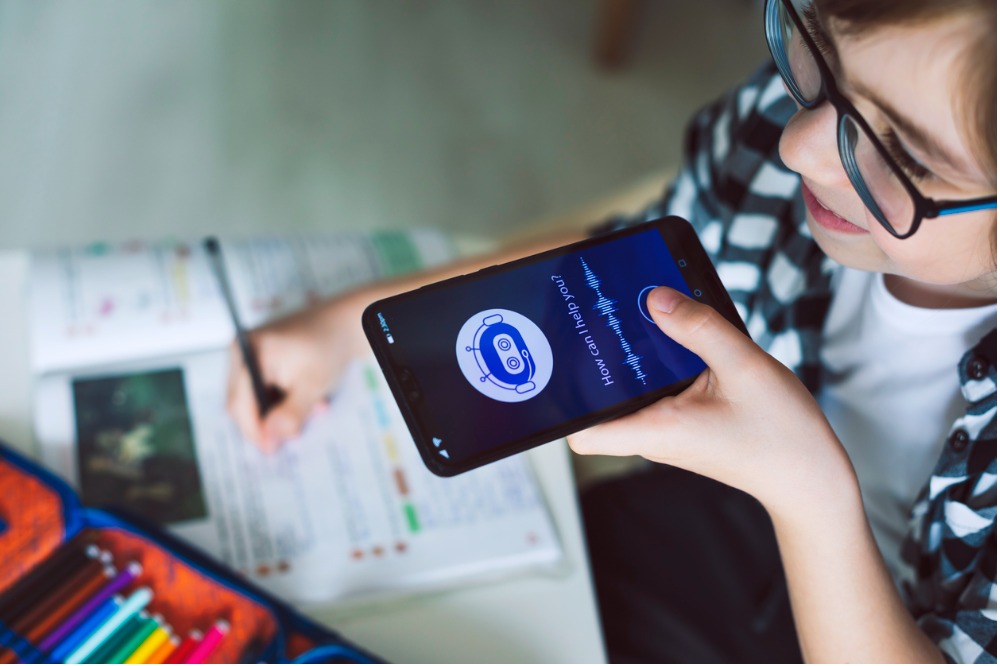
New research from Australia’s online safety regulator shows nearly four in five children aged 10 to 17 have used an artificial intelligence (AI) assistant. More than half are turning to these tools for personal or emotional support rather than schoolwork alone.
The report, Talking to Machines: Children’s Experiences with AI Assistants and Companions, surveyed 1,950 children aged 10 to 17 living in Australia. It was conducted between 2 February and 4 March 2026 and was published by the eSafety Commissioner, Australia’s national online safety regulator.
Around 78% of surveyed children had used an AI assistant, while 8% had used an AI companion designed to provide emotional support.
ChatGPT was the most widely used service, reaching 70% of surveyed children. Usage differed by age, with around 87% of teenagers having used an AI assistant, compared with 64% of children aged 10 to 12.
Most children who had used an AI assistant or companion had used them for functional reasons, such as information, learning or translation (91%), or writing or editing (70%), while many also used them for entertainment (68%).
Fifty-four per cent reported using AI for social and personal reasons. Among these uses, 33% asked AI for advice about physical health, 33% asked for advice about what to do in a particular situation, and 20% asked AI for advice about their mental health and wellbeing.
Compliance deadlines now in force
The findings arrive as Australia’s regulatory framework for AI services affecting children has moved from design to enforcement. Under the country’s online safety codes, certain generative AI, chatbot and companion services must implement safeguards to prevent children from being exposed to harmful material. These safeguards cover both unlawful content and age-restricted material, including self-harm, disordered eating and violence content.
The age-restricted material codes commenced on 9 March 2026, and eSafety is now requiring providers to demonstrate compliance. Companies that do not comply face civil penalties of up to $54.6 million.
The report also found that one in five children who used an AI assistant or companion reported a potentially inappropriate or harmful interaction. These included controlling behaviour, harmful advice, bullying or exposure to hateful content.
Around one in three children had also shared personal or sensitive information with an AI tool, including photographs or personal secrets.
Regulator points to design obligations
eSafety Commissioner Julie Inman Grant said the findings show AI is becoming part of growing up.
“Parents are navigating rapid changes in technology alongside everything else that comes with raising children today. Artificial intelligence is evolving quickly, and children are finding new ways to incorporate AI into their daily lives,” she said.
“Many parents will recognise that their children use AI to help with homework or answer questions, and many are using these tools in positive ways. What this research also shows is that young people are also turning to these tools for advice, reassurance and conversations about personal issues.”
Inman Grant said technology providers bear responsibility for ensuring their services are safe. She called for Safety by Design to be central to AI development, including:
- embedding strong safeguards into services
- discouraging unnecessary sharing of sensitive personal information
- reducing the risk of harmful interactions
- considering children’s developmental needs throughout design
“Safety by Design has never been more important,” Inman Grant said.
eSafety said the findings will inform its ongoing education, awareness-raising and regulatory work, including engagement with AI companies to verify compliance with the codes.