



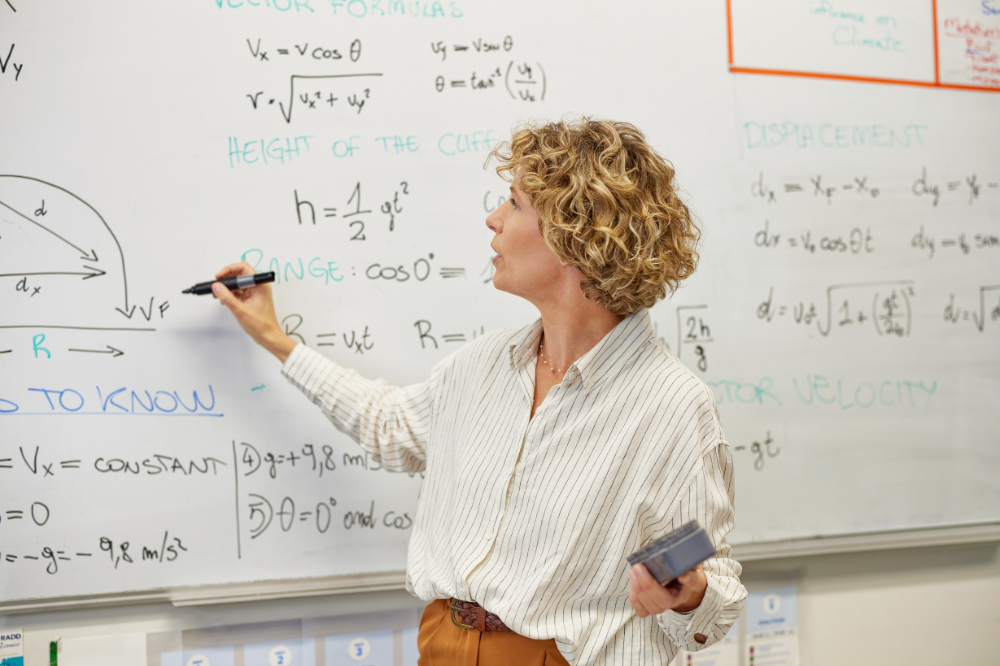
By age 15, an estimated 130,000 Australian students are not meeting the national proficiency standard in mathematics, while around 114,000 fall below the benchmark in reading, according to the latest PISA data.
The findings mean almost half of Australia's 15-year-olds are struggling to achieve expected standards in maths, and more than four in 10 are falling short in reading.
For disadvantaged children, who tend to start school well behind their advantaged peers, the gap only gets wider with every year of schooling. According to an analysis of 2022 NAPLAN data, the learning gap more than doubles in reading and numeracy between Year 3 and Year 9.
The tutoring landscape in 2026
In a 2023 report, the Grattan Institute recommended that high-quality small-group tuition should be embedded in all Australian schools as part of a national drive to close the learning gap between struggling and high-achieving students.
However, research published by the Centre for Independent Studies in 2024 suggests tutoring programs need to go back to the drawing board, finding that small group tutoring sessions for struggling students are not improving learning outcomes despite significant spending.
The study said mass tutoring programs like those in NSW and Victoria need “a complete overhaul” to make an impact on education outcomes. Still, Australia’s private tutoring industry is booming, with reports showing that it is now valued around $2.2bn, up from roughly $1.2bn five years ago.
As schools grapple with declining performance in key learning areas, an important question remains: where are students struggling most, and what can those challenges tell us about the way these subjects are being taught in classrooms?
The confidence crisis behind maths struggles
Apex Tuition Australia co-founder, Max Milstein, says since the company began operating in 2015, the most common subject for tutoring has been Maths.
“Maths makes up 40% of all the tutoring we do, and we tutor English, all Sciences, all Humanities and Languages,” Milstein told The Educator.
“The majority of our tutoring is for Year 11 and 12 students, and interestingly, within that cohort we actually receive the most requests for the easier levels of Maths, subjects like General Maths in the VCE and Maths Standard in the HSC.”
The company has also noticed a trend of fewer students taking on the more challenging Maths subjects in Year 11 and 12, which is corroborated by dropping enrolment numbers for these subjects, Milstein added
“We need students to complete these subjects so they develop the problem-solving skills and thinking frameworks necessary for success in STEM fields of which Australia has a shortage of applicants for at the moment,” he said.
“We've written about how Australian students' Maths performance has been declining over the last 30 years, particularly relative to the rest of the world, Australia's PISA Maths scores have fallen roughly 37 points since the test began, meaning the average 15-year-old is now more than a year behind where students were a decade ago.”
Milstein said declining enrolments in higher-level Maths are part of the same story.
“As a Maths tutor myself, and someone who speaks to parents every day about their kids and Maths, the biggest problem we've identified is that many students have gaps in their Maths knowledge that never get addressed,” he said.
“More so than any other subject, Maths is cumulative, each year builds on the last. So if a student has a gap from Year 7 Maths that's never closed, Maths just keeps getting harder and harder, which erodes their confidence and leads to a belief that they're simply ‘not good at Maths.’”
Milstein said this creates “a vicious cycle” where it just becomes easy for students to opt out of Maths entirely.
“I think schools could proactively diagnose Maths issues in the junior years, pinpointing specific areas where students are behind standard and providing focused help to bring them up to grade level before the gaps compound,” he said.
The ‘vicious cycle’ of maths anxiety
A big obstacle for many young people trying to learn this subject remains maths anxiety – a fear or apprehension of mathematical activities – which is holding back student achievement and even employment opportunities in STEM fields.
A 2024 paper by the Centre for Independent Studies warned that maths anxiety can disrupt performance during mathematical activities, potentially through concerns about performance that, in turn, reduces attentional resources that can be used for mathematics learning or performance in tests.
Milstein says Maths anxiety is something that has become louder every year that the company has worked with families.
“We hear that many students have significant self-doubt and engage in negative self-talk,” he said. “The pattern is usually the same: students find the work a bit hard, they don't yet have the skills to problem-solve their way through it, they lose confidence, and then they decide they don't want to do it at all.”
Milstein said it's less about specific Maths topics and more about self-belief and how students view themselves.
“Ultimately, this is why families come to us for tutoring. A lot of the work we do, particularly with younger students, involves restoring their confidence back, working with them one-on-one and providing a safe, non-judgmental space where they can make mistakes, ask questions and learn,” he said.
“The core principle we follow at Apex Tuition Australia is to first diagnose exactly where a student is struggling, then provide tailored support on that topic, and finally revisit it later to ensure the learning has stuck.”
Why capable students still struggle
Success Tutoring was founded in 2017 by Michael Black when he was just 17 years old and operating from a spare room in his parents' home in Sydney. The company began as a tutoring service focused on English and Mathematics and later expanded into one of Australia's fastest-growing tutoring franchise networks.
Black said Mathematics and English continue to generate the strongest demand across Success Tutoring’s vast network, with the highest concentration of students typically coming from Years 4 to 10.
“We are also seeing growing demand from senior students preparing for ATAR and university entrance pathways,” Black told The Educator. “What these trends reveal is that many students are falling behind in foundational literacy and numeracy skills long before they reach high school.”
Black said once confidence is lost, the gap often widens every year.
“We regularly see students who are capable learners but have simply missed key concepts and never fully recovered,” he said. “One of the biggest lessons for schools is the importance of mastering fundamentals before moving on. Learning is cumulative and if students do not have strong foundations in reading, writing and mathematics, more advanced concepts become increasingly difficult.”
Black said the other major lesson is that confidence matters.
“Students learn best when they feel capable, supported and engaged. Academic success is not just about content delivery; it is about helping students believe they can succeed and creating environments where they are motivated to keep trying,” he said.
“Our system ensures students not only learn but they also grow their confidence and this is important for lifelong learning and growth into adult years. Our research shows that not only do our students improve their scholastic results, they become happier and more successful people in life.”
The right support changes everything
Rick Molineux, Head of Global Education at Success Tutoring, said the most persistent barrier the company’s tutors see in mathematics is not ability, but confidence.
“Many students convince themselves they are 'not a maths person' after struggling with one topic or receiving poor results. Once that mindset develops, they often disengage from learning altogether,” Molineux said.
“Another common challenge is gaps in foundational knowledge. Mathematics builds sequentially, so if students have not fully understood earlier concepts such as fractions, multiplication or algebraic thinking, future topics become much harder.”
Molineux said the company’s approach focuses on rebuilding both understanding and confidence.
“We break concepts into smaller, manageable steps, celebrate progress and create an environment where students feel comfortable making mistakes and asking questions,” he said.
“The key lesson for teachers and parents is that confidence and competence develop together. Students need encouragement, patience and opportunities to experience success.”
Molineux said when students begin to understand the 'why' behind mathematics and see themselves making progress, their confidence grows rapidly.
“Often the difference between struggling and thriving is simply having the right support at the right time,” he said.
“An important issue to take note of is that students need to be shown how to calculate sums by hand, not on a computer or calculator.”
Molineux said learning to do things manually helps them to think problems through and learn how to solve them.
“This is a critical element of our services and one which helps students to learn for life, not just to improve academically at school and university.”