



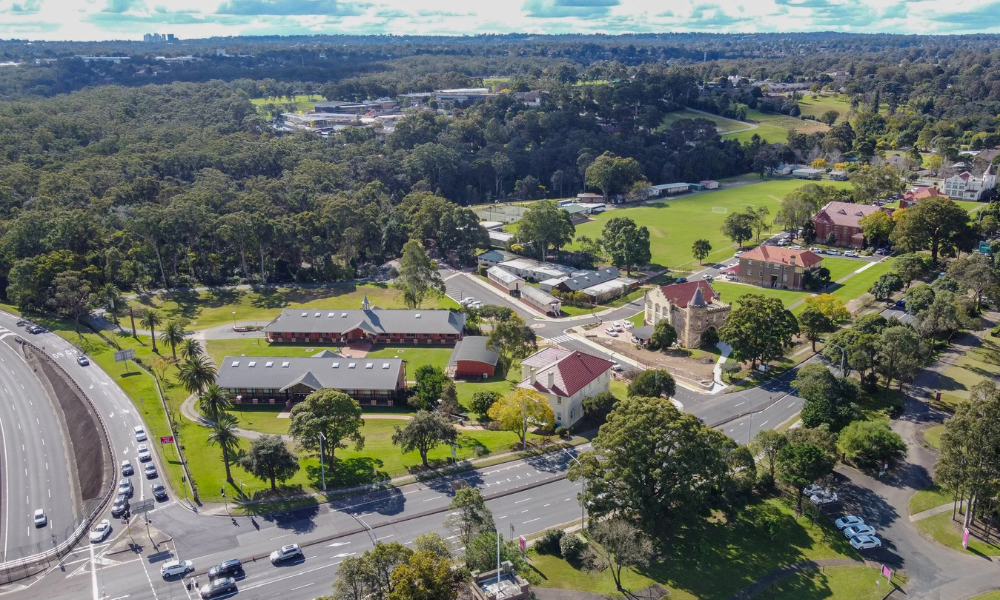
A NSW parliamentary inquiry into Redeemer Baptist School has become a live case study in school governance failure, after new evidence this week detailed how an entire teaching workforce was classified as unpaid religious volunteers for years while the school collected tens of millions of dollars in public funding.
The Legislative Council's Education Committee, established on 7 July 2026 and chaired by Greens MLC Abigail Boyd, heard evidence on 10 August 2026 from Carol Matthews, Secretary of the Independent Education Union of Australia (IEU) NSW/ACT Branch, who told the inquiry into Redeemer Baptist School in North Parramatta, NSW, that its teachers and support staff were engaged as "volunteers" rather than employees.
"I'm not aware of any other school where core teaching duties are performed by volunteers," Matthews told the committee.
For education executives, principals and board members elsewhere, the case is less about one school's conduct and more about how easily governance blind spots can compound over time when financial oversight, staffing structures and child safety reporting lines are not independently tested.
What the inquiry has heard so far
Matthews told the committee that students and teaching staff at the school had, at times, shared bedrooms, and that the school relied on unpaid manual labour from students and staff, including building maintenance, gardening and lawn mowing. She said the arrangement had created "a chilling effect on staff seeking union support," and raised concerns about the school exerting financial control over staff property.
The hearing followed a joint investigation by The Sydney Morning Herald and The Age, which found the school received approximately $106.7 million in combined government grants and parent fees between 2015 and 2024 while reporting zero salary expenses across that period, according to Clinton Free, Professor of Accounting at the University of Sydney, NSW, who reviewed the school's financial records. Professor Free noted that labour costs typically make up 60 to 75 per cent of total expenses at comparable schools.
Staff are instead classified as members of the school's religious Ministry Order and receive a discretionary stipend of about $2,000 a month, well below the roughly $7,515 monthly minimum award wage for a NSW teacher.
Why the volunteer classification matters to every board
The Fair Work Ombudsman treats the volunteer-versus-employee distinction as a question of substance, not labelling: a genuine volunteer is under no obligation to attend a workplace or perform rostered duties, and does not expect payment. Where staff are directed on hours, tasks and conduct, the same legal tests can classify them as employees regardless of the language used to describe the arrangement — a principle any school running volunteer, contractor or gig-style staffing models should be actively testing rather than assuming.
Matthews said non-government school staff are ordinarily covered by enterprise agreements broadly comparable to NSW government school salaries, and that a federal minimum award, including superannuation, applies even where no such agreement exists. "It appears that the school's teacher 'volunteers' are not receiving even these minimum conditions," she said.
The inquiry also heard from former students and teachers, and from Dr James Cockayne, NSW Anti-Slavery Commissioner. Redeemer Baptist School has said its governance and operations meet the requirements of the NSW and federal governments, describing the work performed by Ministry Order members as a voluntary "lifestyle of sacrifice."
Lessons for boards on financial control and oversight
Three regulators are now involved: the NSW Education Standards Authority (NESA), which NSW Education Minister Prue Car confirmed is investigating; the federal Department of Education, referred by federal Education Minister Jason Clare; and the Australian Charities and Not-for-profits Commission (ACNC), referred by federal Assistant Minister for Charities Andrew Leigh. That level of regulatory overlap is itself instructive — it typically emerges only once several independent checks, financial, industrial and charitable, have failed to catch the same issue at once.
For school leaders, the case underlines why proactive risk management has become an urgent governance priority across Australian schools, and why independent school board members carry legal responsibilities equivalent to company directors, regardless of the school's size or structure. It also echoes broader sector warnings that hidden compliance risks can expose schools to serious legal consequences unless boards actively test, rather than assume, that staffing and financial arrangements meet legal minimums.
The Redeemer Baptist case remains before the inquiry, with further hearings expected. For boards elsewhere, the practical takeaway arrives well before any findings are handed down: regularly and independently verifying how staff are classified, paid and protected is a duty of care, not a compliance formality.