



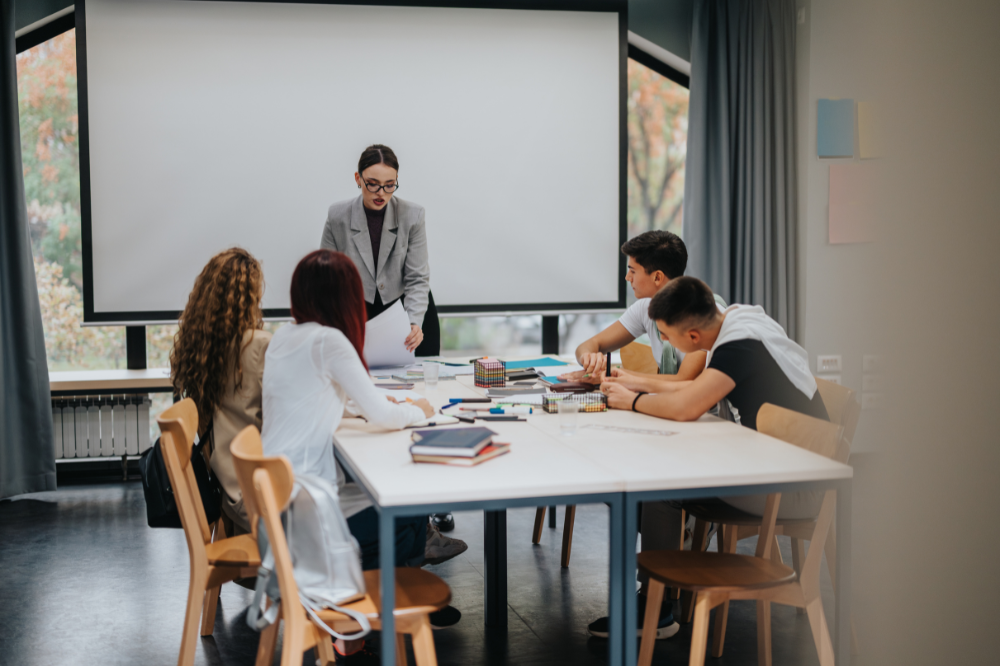
Respectful debate on contemporary or controversial issues is becoming harder to implement in classrooms, raising concerns about future democratic engagement and social cohesion, a new survey has found.
The poll, conducted by the Rule of Law Education Centre between February and April 2026, highlights the impact of declining social cohesion in the community on teachers’ capacity to facilitate and model respectful debate in the classroom.
Teachers can’t do it alone
“Effective civics and citizenship education relies on an open classroom climate. This cannot rest on teachers alone,” CEO Sally Layson said.
“Teachers remain strongly committed to their role in developing students’ democratic skills and understanding, but face significant barriers in delivering high quality, relevant civics education.”
These include concerns about challenging reactions from parents or students and a crowded curriculum, Layson noted.
“At a time of growing concern about declining social cohesion and increased polarisation, schools play a crucial role in strengthening democratic understanding and trust in our community,” she said.
“Research consistently shows that civics and citizenship education is most effective when it is meaningful, relevant and connected to students’ everyday lives.”
Layson said students are more likely to engage with democracy when classrooms encourage open discussion.
“Students develop stronger civic knowledge, greater interpersonal and institutional trust, and a deeper sense of their role in a democracy when learning takes place in open classroom environments,” she said.
“In such classrooms, diverse views are welcomed, respectful discussion of contemporary issues is encouraged, and young people can see the relevance and integrity of democratic institutions and processes, and trust that they will be treated equally and fairly by them.”
Educators call for more guidance
Many of the teachers surveyed agreed schools play a vital role in preparing students for civic life.
“Schools should be a safe place to hear alternative views without fear of 'indoctrinating' from a parental or societal perspective,” one teacher from Western Australia wrote. “Leaders and government need to understand schools are societal microcosms.”
When asked how often they provided opportunities for students to engage in open, respectful debate or discussion on contemporary or controversial issues, just over half of teachers reported doing so at least twice a week. Only 15% said they facilitated these discussions less than once a fortnight.
Teachers were also invited to share broader reflections on the role schools and classrooms play in supporting social cohesion and helping students understand shared social norms, values and principles.
Their responses revealed strong support for discussion-based learning, alongside concerns about teacher confidence, policy constraints and the need for greater professional support.
“Being a commerce/humanities teacher can mean walking a fine line, as you need to use current contexts for educational purposes,” said one teacher. “Perhaps having the right professional development would enable me to better manage challenging situations in the classroom. Although, our students are pretty respectful of each other's opinions.”
“I think these discussions are central to the teaching of humanities. I would like some support in getting students to feel confident to disagree in a respectful way,” remarked another teacher.
One respondent said fostering shared norms while encouraging acceptance of differing viewpoints was a critical part of schooling, but argued some educators felt policies around controversial opinions had created a tendency to avoid difficult topics altogether.
“We need to continue to create pathways to support social cohesion and provide teachers with the tools to enable this process,” noted a teacher.
Another teacher said classrooms should provide students with the knowledge needed to understand shared social norms, values and principles, while also offering a safe environment in which they can question, explore and defend their ideas
The Rule of Law Education Centre is calling on all governments to prioritise high quality professional development to strengthen teachers’ skills and confidence to address challenging topics in the classroom, and to provide professional guidelines and pedagogical strategies for teachers that help them facilitate discussions on controversial topics to limit personal bias.
Layson said educators should help students explore controversial issues while learning to disagree constructively.
“Classrooms must be an environment that is a safe space, where students are equipped with the knowledge and skills to disagree respectfully, explore and debate controversial ideas, and learn how democratic disagreement works in practice.”