



Australian classrooms rank among the most disruptive in the world, according to the latest Programme for International Student Assessment (PISA) survey.
Australian students reported a worse “disciplinary climate” than students in 67 other countries, with disruption levels exceeding the OECD average across six separate indicators. Almost two-fifths (39%) of students said they get distracted by digital devices, compared to an OECD average of 28%.
In NSW alone, more than 1,000 students were suspended from NSW public schools every week last year, as violence, vaping, bullying and disruptive behaviour pushed sanctions to record levels.
The data, from the NSW Education Department, found 41,125 students were suspended, a 21% jump on 2023, while 107 were expelled.
The surge comes more than a year after Principals were handed sweeping new powers to extend suspensions and send unruly students home, reigniting debate over whether the shakeup is working.
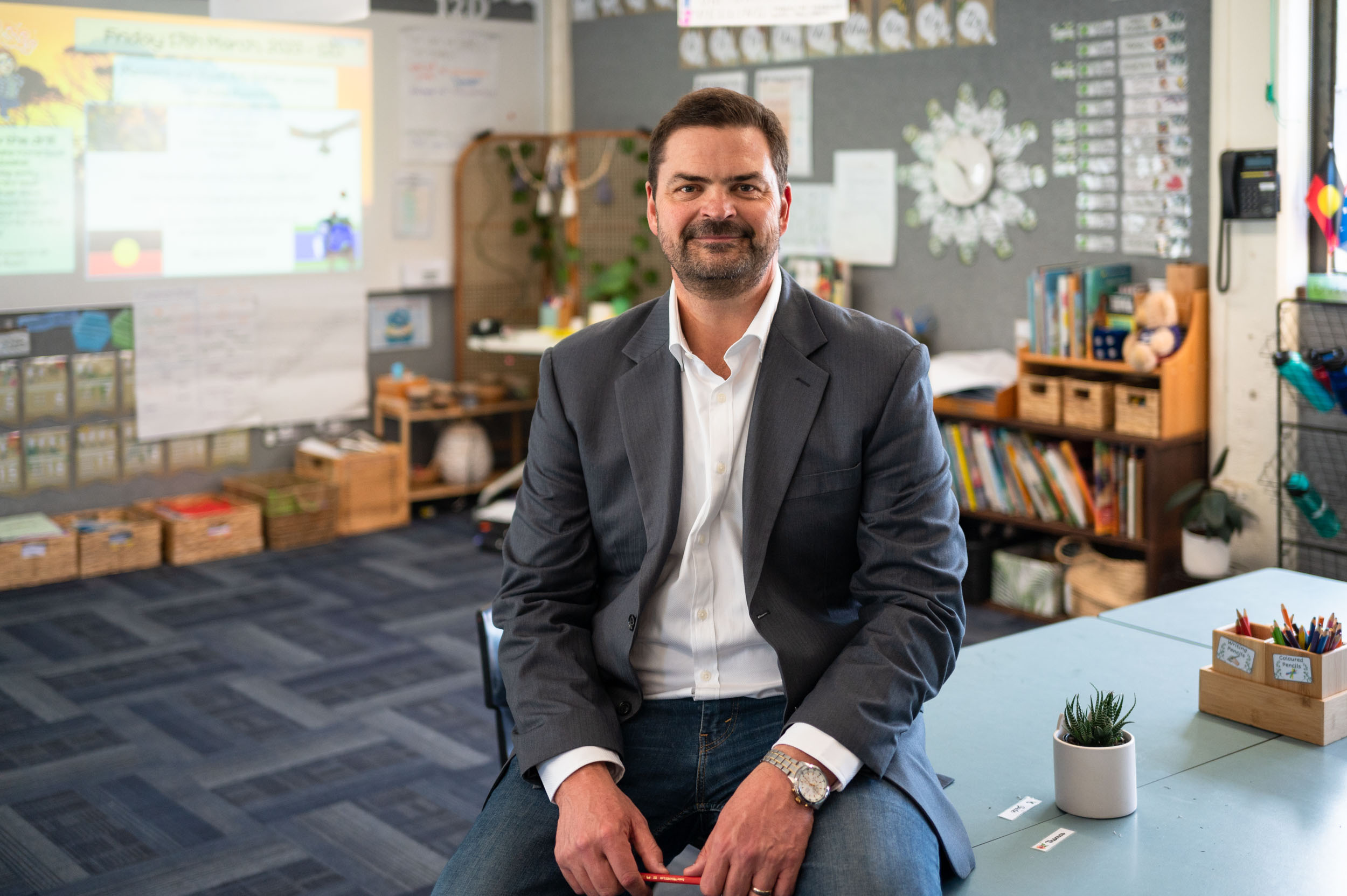
Former Principal, educator and author Adam Voigt says cracking down harder or tightening classroom management misses what's actually driving disruptive behaviour.
In his new book The Truth About Student Behaviour, Voigt argues teachers don't need to be told they're managing student behaviour poorly — they need approaches that actually work.
The Educator recently sat down with Voigt to discuss the most important takeaways from his book for Australian teachers and leaders.
'You cannot technique your way out of a culture problem'
Voigt said the student behaviour gap between Australia and its OECD peers has far more to do with connection than curriculum.
"Australia ranked 69th out of 80 countries on classroom disciplinary climate in PISA 2025. That's far less a teaching technique or effort problem and rather a belonging and culture problem," Voigt told The Educator.
"The research is consistent about behaviour in schools: what changes student behaviour is the quality of the relationship between adult and young person, the degree to which students feel they belong and the extent to which the culture around them models genuine accountability."
Voigt said behaviour consequence matrices, well-intended respect programs, theme days, awareness raising, motivational speeches, bribes and crackdowns have all had their shot at supporting teachers meaningfully, and they’ve failed.
"It’s time to see this problem through a new lens," he said. "The Truth About Student Behaviour is built on a simple but uncomfortable premise: we have been trying to fix behaviour by fixing children, when the more powerful lever has always been the culture they inhabit."
Voigt said schools that become genuinely relational - where every adult, in every informal interaction, treats young people as capable of growth - produce something measurably different from schools that manage behaviour through systems and sanctions.
"What should teachers stop wasting energy on? The behaviour management courses that teaches new techniques without changing the culture those techniques are implemented in," he said. "You cannot technique your way out of a culture problem."
Leaders have more power than they think
Data from AITSL's 2024 Australian Teacher Workforce report found that nearly halfd (47%) of Australian teachers planning to leave the profession cited student behaviour as a reason, up from just 25% in 2020. The Educator asked Voigt why schools often default to classroom management courses instead of asking what's making the job unsurvivable in the first place.
"I want to be careful not to blame school leaders here, because most of them are working extraordinarily hard inside systems that haven't given them the design freedom - or the trust - to do what they already suspect would actually work," he said. "Sending a struggling teacher on a classroom management course isn't born of indifference. It's often the only sanctioned response available."
Voigt said schools reach for workshops because that's the sanctioned response: the community wants visible action, and compliance machinery rewards whatever can be documented. So leaders use the tool they've been handed, even when they privately doubt it'll touch the culture behind the problem.
"What The Truth About Student Behaviour argues - and what I'd want every school leader to genuinely hear - is that they have more design freedom than the system has tricked them into believing they do," he said.
"The most powerful levers for changing student behaviour sit inside the school: in the culture leadership builds daily, in the consistency of adult interactions with students and in the degree to which students feel they genuinely belong,"
Voigt said no external workshop addresses these challenges and no centrally mandated compliance framework does either.
"They grow from leadership that is trusted to design the conditions for authentic connection," he said. "Our systems need to afford school leaders that trust. And our school leaders need to know they're already equipped to use it."
'A student who truly belongs doesn't need the device to get through the day'
With a growing body of research linking excessive screen time to violent outbursts among children, The Educator asked whether a classroom digital detox could ease Australia's worsening student behaviour, and how much difference such a shift might realistically make.
"It would most likely help - and most Australian schools already have mobile phone bans in place and the under-16 social media ban is a meaningful step," he said. "The NSW Government's recent move to limit broader screen use in schools takes this further - and I think it's directionally correct."
A 2022 study by Macquarie University found too much video gaming can have "serious behavioural impacts" on children and teens, and in extreme cases can lead to missing school and aggressive behaviour towards family members.
"The Macquarie research is part of a growing body connecting excessive screen time to impaired emotional regulation, reduced empathy and increased impulsivity," he said.
"The work by American social psychologist and author Jonathan Haidt makes a compelling case that the technology environment young people have been immersed in since around 2012 has directly damaged the social and emotional preconditions for good behaviour and belonging - and Australia's PISA belonging data over that same period is not a coincidence."
However, Voigt cautioned that reducing screen time in classrooms addresses only one element of a much larger challenge.
"One of the core arguments in The Truth About Student Behaviour is that behaviour problems are almost always symptoms of something deeper - disconnection, a lack of belonging, the absence of genuine relational culture in a school," he said. "A student who truly belongs doesn't need the device to get through the day."
Voigt said it comes down to a simple question of priorities.
"Reducing screen exposure and building belonging culture are both/and, not either/or - but if I'm choosing where the bigger lever sits, it's undoubtedly attending to the culture."
What money alone can't fix
Zooming out, Voigt said it's important to remember that we don’t need to choose between fairly funded schools and drastically improved student conduct.
He said that if every Principal in Australia read The Truth About Student Behaviour tomorrow and genuinely led differently as a result, schools would be "measurably better within one to two years regardless of the funding landscape".
"The evidence on this is consistent: the single most powerful lever in any school is the daily, visible, consistent behaviour of its leaders," he said. "A Principal who genuinely treats relationships as load-bearing structures - not a luxury item but a structural precondition for everything else - produces a different culture, and a different culture produces different behaviour."
Voigt said he has seen this play out in some of Australia's most disadvantaged communities, adding that while resources matter, they don't preclude improvement.
"At the same time, I'd be dishonest if I suggested that cultural leadership alone is sufficient when the system is actively working against you," he said. "Australia's chronic absenteeism, its entrenched equity gap, its burnt-out teaching workforce - these are structural problems that require structural solutions."
Voigt said while his book is no fix for these problems, Australi's education ministers can be.
"So, my answer is: read it, lead differently because of it and your school will be genuinely better for it. And then use whatever credibility and platform you have to insist, loudly, that those who lead your system change too."