



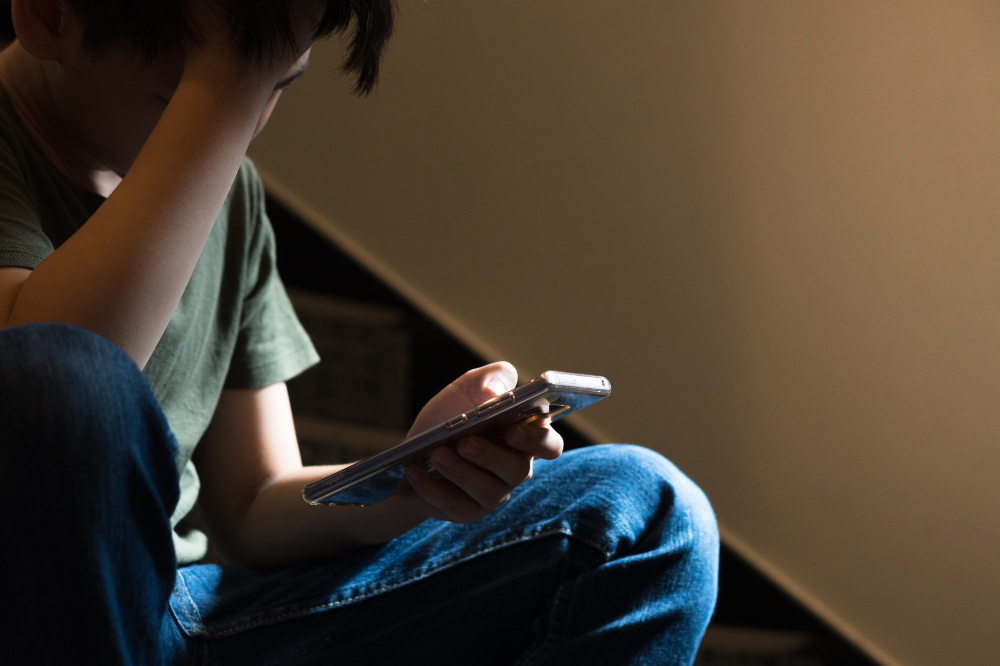
Social media platforms are deliberately amplifying misogynistic content to teenage boys, and the consequences are showing up in Australian classrooms. That is the central argument Chanel Contos, chief executive of Teach Us Consent, put to the National Press Club in Canberra on 2 September 2026.
Contos, who successfully campaigned for mandatory sexual consent education in Australian schools in 2023, has turned her focus to recommendation algorithms for social media. These are the systems that decide what users see on platforms such as TikTok, Instagram and YouTube.
Her organisation’s Fix Our Feeds campaign has gathered more than 13,000 signatures, backed by former Prime Ministers Julia Gillard and Malcolm Turnbull. The campaign is calling on the federal government to require platforms to make algorithms “opt-in” by default.
Social media algorithms designed to provoke
“Algorithms are intentionally designed to prioritise content that provokes the strongest emotional reactions,” Contos said. “This creates an environment where hateful content doesn’t merely exist, it succeeds and dominates.”
In research cited by Teach Us Consent, accounts set up to mimic teenage boys encountered extreme misogynistic content within 23 minutes of signing up. The content included material suggesting it is acceptable to pressure partners into sexual acts. A recent study found 16% of Australian Gen Z men agree with this view.
What does this mean for school leaders?
Teachers on the frontline are already dealing with the fallout.
A 2025 study published in Gender and Education drew on 160 survey responses and 14 in-depth interviews with Australian secondary teachers. The study found that sexism and misogyny in classrooms has become “more overt, more extreme, and more animated.”
This pattern is consistent with what schools and researchers have long flagged as a structural problem, not just a behaviour management one.
An Essential Research poll published on the day of Contos’s address found 43% of Australians are concerned about manosphere content affecting someone in their lives. Some 65% agree it is almost impossible for teenage boys to avoid seeing it.
Can the algorithm itself be regulated?
Contos’s proposal builds on Australia’s world-first under-16 social media ban, which took effect in December 2025. The Fix Our Feeds model would go a step further: users would only see content from accounts or hashtags they actively follow. Algorithmic recommendations can be available only if opted into.
“This is about giving people back choice and control over what they see online,” Contos said.
The Albanese government had flagged interest in the concept in the week before the address. Prime Minister Anthony Albanese and Environment Minister Tanya Plibersek both indicated openness to expanded algorithm controls. No formal commitment has since been announced.
Federal Education Minister Jason Clare has called for schools to reduce screen time following Australia’s worst-ever PISA 2025 results. He noted that students who use screens more tend to score lower on key measures.
Digital wellbeing and gendered safety concerns now overlap. School leaders face growing pressure to treat student screen exposure to social media algorithms as a pastoral matter, not just a learning one.
School leaders face a familiar challenge: the harms arriving in their classrooms have origins well beyond the school gate.