



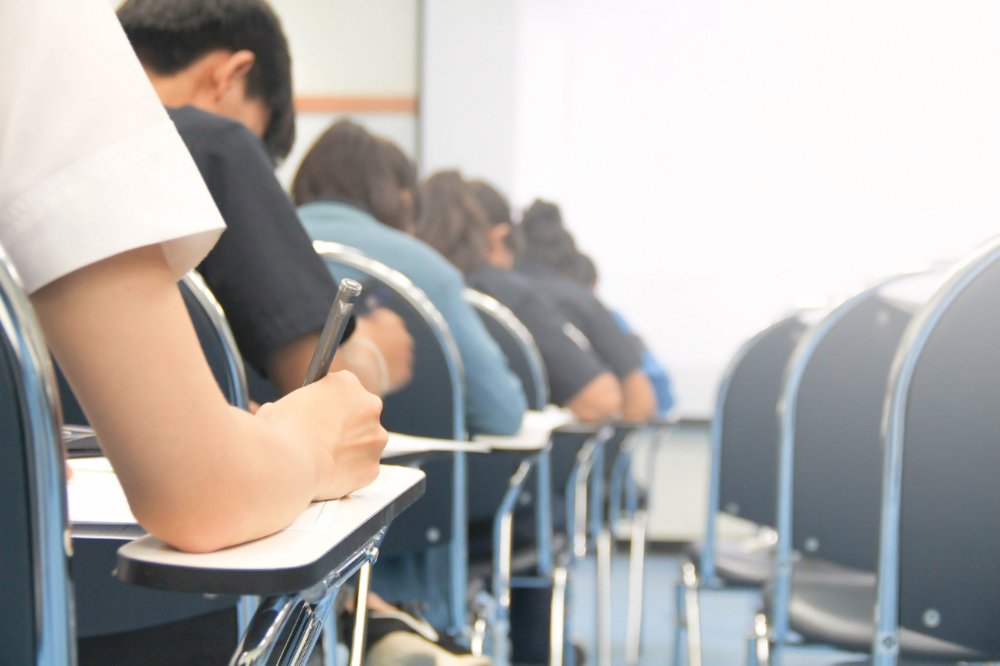
As Year 12 students across the country file into exam halls, some will be buzzing with the finish line finally in sight. For others, the final exams can be an anxiety-inducing experience.
Recent reports suggests those challenges start well before Year 12, and are more widespread than many might think.
The University of Adelaide’s Resilience Survey of nearly 109,000 students found nearly a third of secondary and over a quarter of primary students have high depression or anxiety symptoms, with many more reporting moderate distress.
Unfortunately, the picture doesn’t look much better for those tasked with helping young people manage their wellbeing during this highly stressful time.
More than two-thirds (68.8%) of teachers surveyed by researchers from UNSW Sydney described their workload as “largely or completely unmanageable”, with a staggering 90% reporting “severe stress”.
Ben Zunica, a secondary mathematics educator and researcher in the Sydney School of Education and Social Work at the University of Sydney, said the biggest thing is helping students keep the exams in perspective.
"The HSC matters, but it does not determine the pathways for the rest of their life," Dr Zunica told The Educator. "Being well prepared, getting adequate sleep, exercise and maintaining normal routines are fundamental to doing your best, but so is knowing that the adults around you are calm and supportive."
He said parents and schools should avoid adding to the pressure, which can be created by constantly asking how much study has been done or making comparisons between students or treating every exam as a high-stakes event.
"At this point, stability and calm can be more useful than another hour of study."
Of course, students aren’t the only ones feeling the strain. With teachers spending much of the exam period supporting anxious students, their own wellbeing can quickly take a back seat.
Dr Zunica said teachers can absorb a lot of students’ anxiety during exam periods, particularly when they care deeply about how their students perform.
"Their standing as professionals can also be judged by student performance in these exams, creating considerable pressure," he said. "Teachers need to resist carrying every student’s stress themselves and attend to their own wellbeing through activities away from work and building their own support networks."
Dr Zunica said small gestures from the top can go a long way during this stressful period.
"School leaders can help by recognising that the HSC exam period is intense for teachers and can assist by reducing unnecessary administrative demands and checking in with staff."
Where good intentions fall short
While schools have invested heavily in teaching students how to manage stress and anxiety, new research suggests that knowing the right strategies is only half the battle. The real challenge, it seems, is getting students to use them when the pressure is on.
A study of students attending schools using Wellio, an online wellbeing platform used by more than 500 Australian schools, found that while 56% of students say they know how to calm down when worried, angry or sad, only 36% say they practise those techniques when stress is high.
Nearly all (98%) responses came from students in Years 7 to 12, suggesting that as final exams approach, schools should focus less on teaching calming strategies and more on helping students use them under pressure.
“Knowing what to do and being able to do it when things get hard are different skills,” Lachlan Oreo, Co-Founder and Co-CEO of Wellio, told The Educator.
“The study’s findings suggests a gap between having the right language for wellbeing and being able to use those skills in the moments that count: a big exam, a friendship falling apart, a rough night at home.”
Oreo said the true test of a student’s preparation often comes when they’re under pressure.
“Life after the school gates throws different challenges at young people. So preparedness is less about whether students have heard good advice, and more about whether those skills have been rehearsed often enough to show up when they are tired, upset or under pressure.”
Moving past the wellbeing workshop
Oreo said the challenge for schools now is shifting wellbeing programs from awareness to deliberate practice, so that students don’t just know the right strategies but can rely on them when they’re tired, stressed or under pressure.
“Schools have done a lot of good work on awareness through campaigns, workshops and shared language,” he said. “That still matters, but awareness is not the same as a wellbeing program that builds skills through deliberate practice.”
Oreo said ‘effective’ in this context should mean students can use what they have learned when it counts.
“In our experience, schools understand this deeply and are moving towards a cycle of teaching, practising, measuring and adjusting, informed by data,” he said.
“We work closely with hundreds of schools whose staff work incredibly hard to improve their students’ lives, despite limited resources and a growing wellbeing crisis driven by factors outside their control.”