



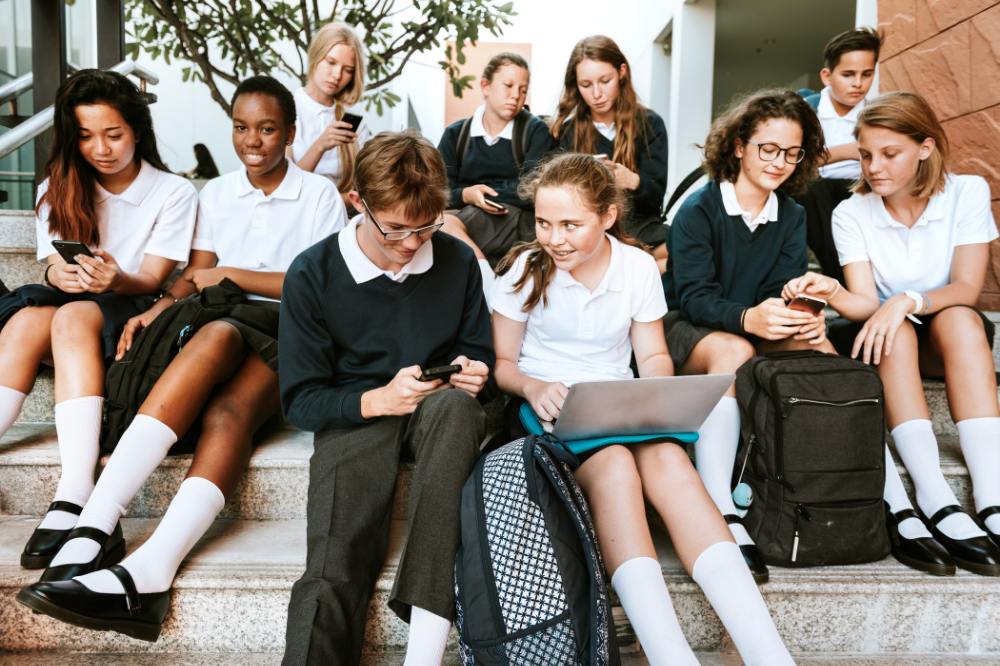
NSW public schools will cap students’ screentime use at 15-minutes a day in a bid to address a “worrying trend” of declining student learning outcomes.
The announcement, made by NSW Education Minister Prue Car on Sunday, will see the limits take effect from the beginning of next year across the state’s public school system.
Under the initiative, Kindergarten to Year 2 students will be limited to 15 minutes a day on laptops, tablets or desktop computers, increasing slowly up to a maximum of half the time per subject for senior high school students.
“An entire generation of students are increasingly living in an online world. We have a responsibility to ensure their health and education isn’t adversely affected by excessive screen use,” Car said in a statement.
“Our government’s research is telling us that excessive screen use is a problem, and that parents want screens to be used intentionally. That means screens should not be the default.”
Car said there have already been positive results from the state’s ban on mobile phones, with fewer distractions in class and improved engagement.
“When the research is telling us teenagers are spending as much as seven hours a day on screens, and we are seeing reading and writing skills going backwards for a whole generation of children, we have to act.”
According to the OECD's Programme for International Student Assessment (PISA), Australian students are nearly twice as likely to spend more than 2 hours per day using digital devices for learning as the OECD average, while academic results are falling – particularly among 12 to 15-year-olds in reading and writing.
A $2.5m government-funded study backs up the concern, finding that half of students are distracted by screens during class, while fewer than half of parents believe the benefits of screens outweigh the downsides.
“PISA data shows the more kids are online, the more their results decline,” Federal Education Minister Jason Clare said following the release of the PISA 2025 data. “Other tests like TIMSS, PIRLS and previous PISA rounds show the same thing – students who use screens a lot score lower than those who don’t.”
However, Clare pointed out that this doesn’t mean there is no place for technology in schools.
“Students need to learn digital skills, including how to use – and how not to use – AI; but it does point to the need to wind back the amount of screen time in schools – a digital detox.”
Clare said this issue will be on the agenda when Education Ministers next meet in October.