



For many teachers, one child’s tantrums, defiance or aggression can derail an entire lesson, and the problem is becoming more complex in Australian classrooms.
However, if the results of an evidence-based therapy program developed at UNSW are anything to go by, schools may finally have a powerful way to turn the tide on classroom disruption.
Developed by Professor Eva Kimonis and the team from UNSW's Parent-Child Research Clinic in the School of Psychology, the School Parent-Child Interaction Therapy (School PCIT) program has seen more than 90% of children who completed the treatment overcome clinically significant behavioural problems.
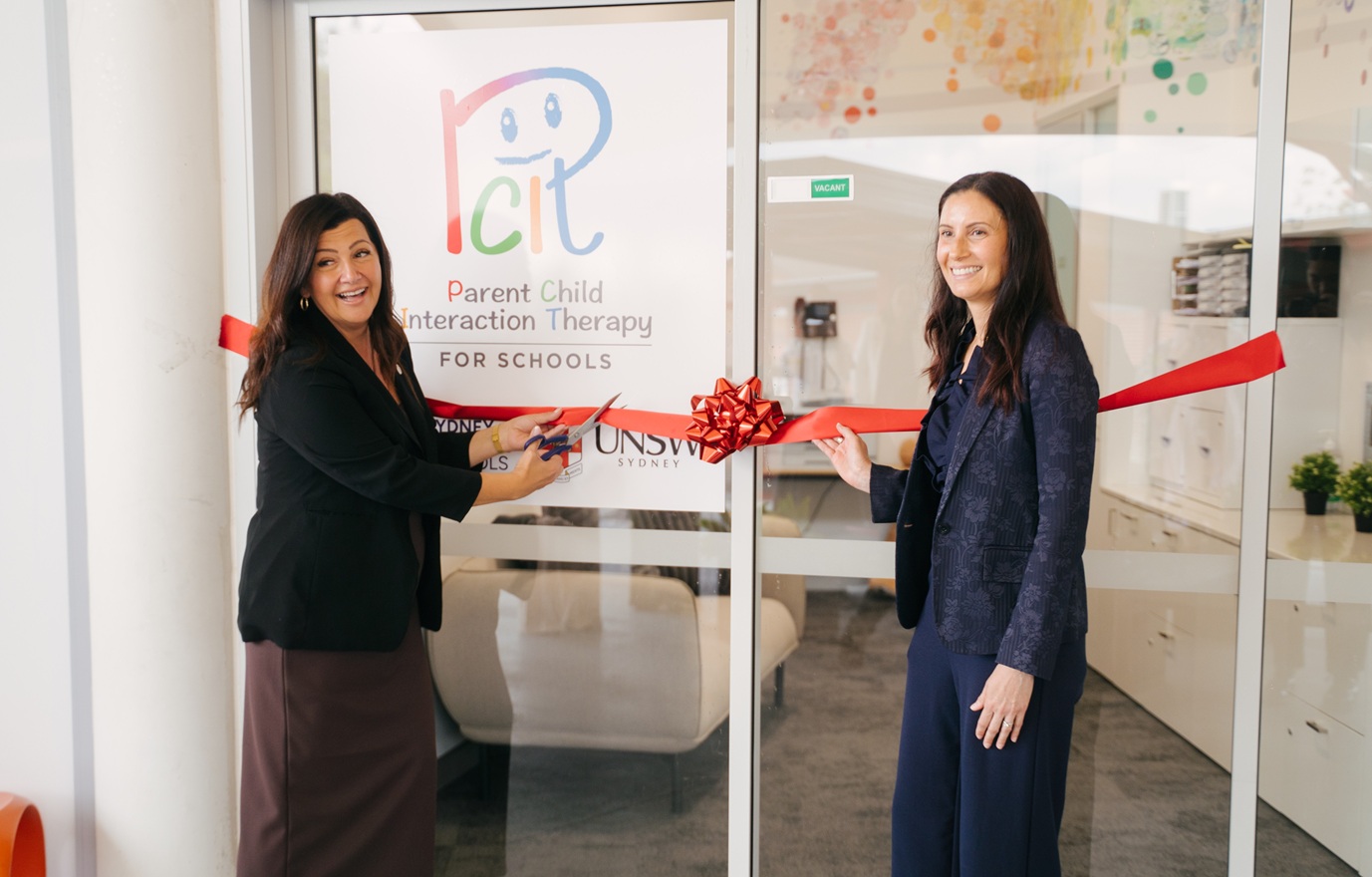
The program, already operating in several south-west Sydney schools, is now expanding into Sydney Catholic Schools, with a new clinic having just opened at St Gertrude's Catholic Primary School in Smithfield.
Designed with the realities of busy classrooms in mind
“I think what makes School PCIT different is that it brings together several treatment components that research shows improve effectiveness,” Professor Kimonis told The Educator.
“These include live coaching, where parents and teachers receive immediate, personalised feedback while interacting with the child, involving parents and children together in treatment, and strengthening relationships alongside teaching effective behaviour management strategies.”
Read more: The student behaviour question schools aren't asking
Professor Kimonis said her clinic’s own research has also shown that involving educators in what has traditionally been a family-based intervention leads to a six-fold greater improvement in classroom behaviour compared with treatment without educator involvement.
“We've also incorporated evidence-based adaptations designed to improve outcomes for children who might not respond to standard treatments,” she said.
“Importantly, School PCIT was co-produced with NSW schools, so it was designed from the outset to work within the realities of busy classrooms, rather than expecting schools to adapt to a clinic-based model.”
She believes it's the combination of these ingredients that makes School PCIT so effective.
“We're not simply teaching strategies; we're helping parents and teachers develop and practise skills in real time, building their capacity to support children long after treatment ends.”
Help that can’t wait in a queue
Clare McMahon, Manager of Student Wellbeing and Learning at Sydney Catholic Schools, said while the supports that Sydney Catholic Schools have been effective for many students, staff recognised an ongoing need for more intensive intervention for some children and families, particularly when challenges extend across both home and school.
“We know that access to specialist services can also be difficult, with long wait times often delaying support when it is needed most,” McMahon told The Educator.
“What attracted us to PCIT was its strong evidence base and its focus on strengthening the parent-child and teacher-child relationships that underpin positive behavioural and emotional outcomes.”
Unlike many traditional interventions, PCIT uses coaching to build the confidence and skills of parents and teachers in real time, fostering consistency and collaboration across home and school settings, McMahon noted.
“PCIT aligns closely with our commitment to partnering with families and helping every student flourish.”
Support that meets teachers where they are
Kelly Kershaw, a researcher in the School of Psychology at UNSW, said the program has been reshaped around teacher feedback, with coaching now delivered beyond the clinic and inside classrooms.
“Today’s teachers are expected to do so much more than teach, with increasingly complex student needs and challenging behaviours contributing to stress, burnout and concerns about safety,” Kershaw told The Educator. “Over the years, we’ve listened to teachers and adapted School PCIT to include both in-clinic and in-classroom coaching, giving them practical, hands-on support where they need it most.”
Kershaw said that while the program’s impact on teacher retention is yet to be measured, it’s clear that teachers need to feel safe, supported and confident in their classrooms.
“We cannot keep asking teachers to do more without giving them the support they need.”