



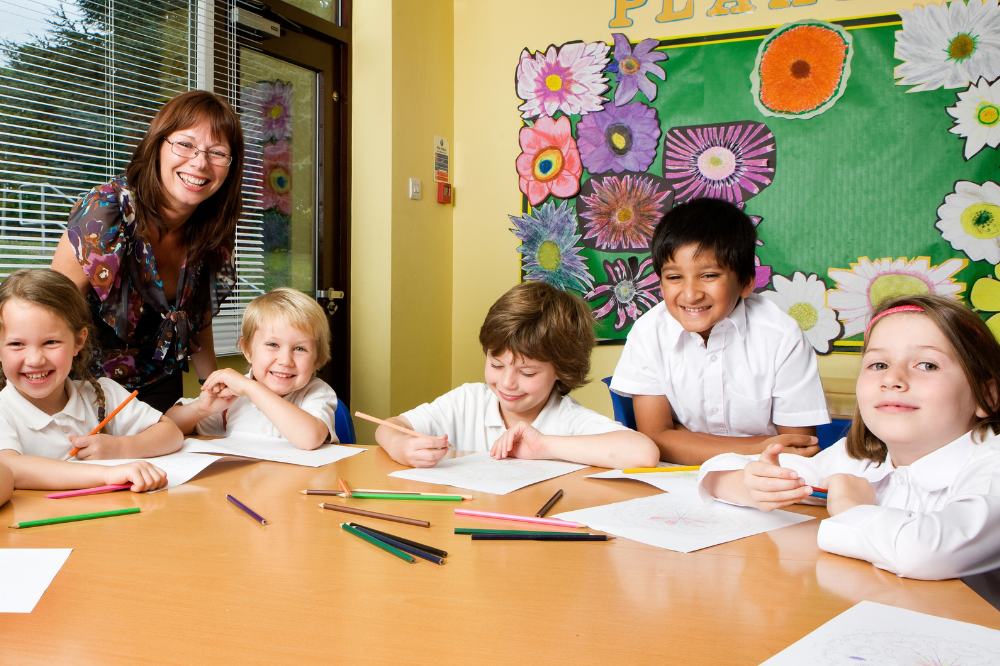
Average class sizes in Australian public primary schools have not changed in a decade and remain above the OECD average, according to the OECD's Education at a Glance 2026 report.
The new OECD report, released Tuesday, puts the average public primary class at 23 students in 2024, the same as in 2015, against an OECD average of 21 in both years. Public lower secondary classes averaged 22 in both years, below the OECD average of 23. The Australian Education Union (AEU) said the average in private lower secondary schools fell from 24 to 19 over the period, against an OECD average of 21.
AEU federal president, Correna Haythorpe, said averages had not fallen even as the diversity and complexity of student needs had grown rapidly.
"Smaller class sizes mean more one on one support for students leading to higher engagement and fewer behavioural issues," Haythorpe said. "Cutting public primary school class sizes to the OECD average of 21 would pay off by increasing the support students receive and the results they achieve."
The AEU said the number of students with disability in public schools has risen 50% since 2015 and now makes up 28.6% of students. National figures from the Australian Curriculum, Assessment and Reporting Authority (ACARA) point the same way: 25.7% of all students received an educational adjustment for disability in 2024, up from 18% in 2015.
Teachers in Australia working above the average
The OECD report also shows primary teachers' annual net teaching time at 857 hours in 2025, against an OECD average of 770. The AEU said the 841-hour average for lower secondary teachers was 18.5% above the OECD average of 710.
On pay, the AEU said Australian teachers earned 92% of the average for full-time tertiary-educated workers in 2025. The OECD's Education GPS data tool, however, says a lower secondary teacher with 15 years' experience can expect one of the highest salaries among OECD and partner countries.
This year's edition focuses on teacher shortages. PISA 2025 results, released in early September, show 49% of Australian students attend schools whose principals say a lack of teaching staff hinders instruction, against an OECD average of 39%, The Educator reported. The AEU put the figure at 61% for public schools and 35% for private schools. Shortages affect 74% of students in low socio-economic public schools, compared with 20% in high socio-economic schools, according to the same reporting.
The AEU also said Australia remains an outlier in how school funding is distributed. It cited government spending on private primary schools at 0.39% of GDP, almost three times the OECD average of 0.15%, while public primary spending was 1.1% of GDP, below the OECD average of 1.16%.
The OECD has cautioned that class size is not the only lever. Its launch presentation said student-teacher ratios and class sizes are only moderately correlated, and that many countries now have more teachers per student than in 2015. The report says OECD enrolments of children aged 5 to 14 are projected to fall 9% between 2024 and 2033, which it said gives policymakers room to redirect teachers to where shortages bite hardest. The AEU said Australia is expected to buck that trend with a small rise, after enrolments grew 10% from 2015 to 2024 against an OECD average of 4%.
Haythorpe said higher salaries, lighter administrative workloads, better early-career support, professional autonomy and public backing were all needed to address shortages. She also criticised One Nation and the Coalition for what she called fake claims of indoctrination and bias in schools.
"As this report states, education systems are only as strong as their teachers."