



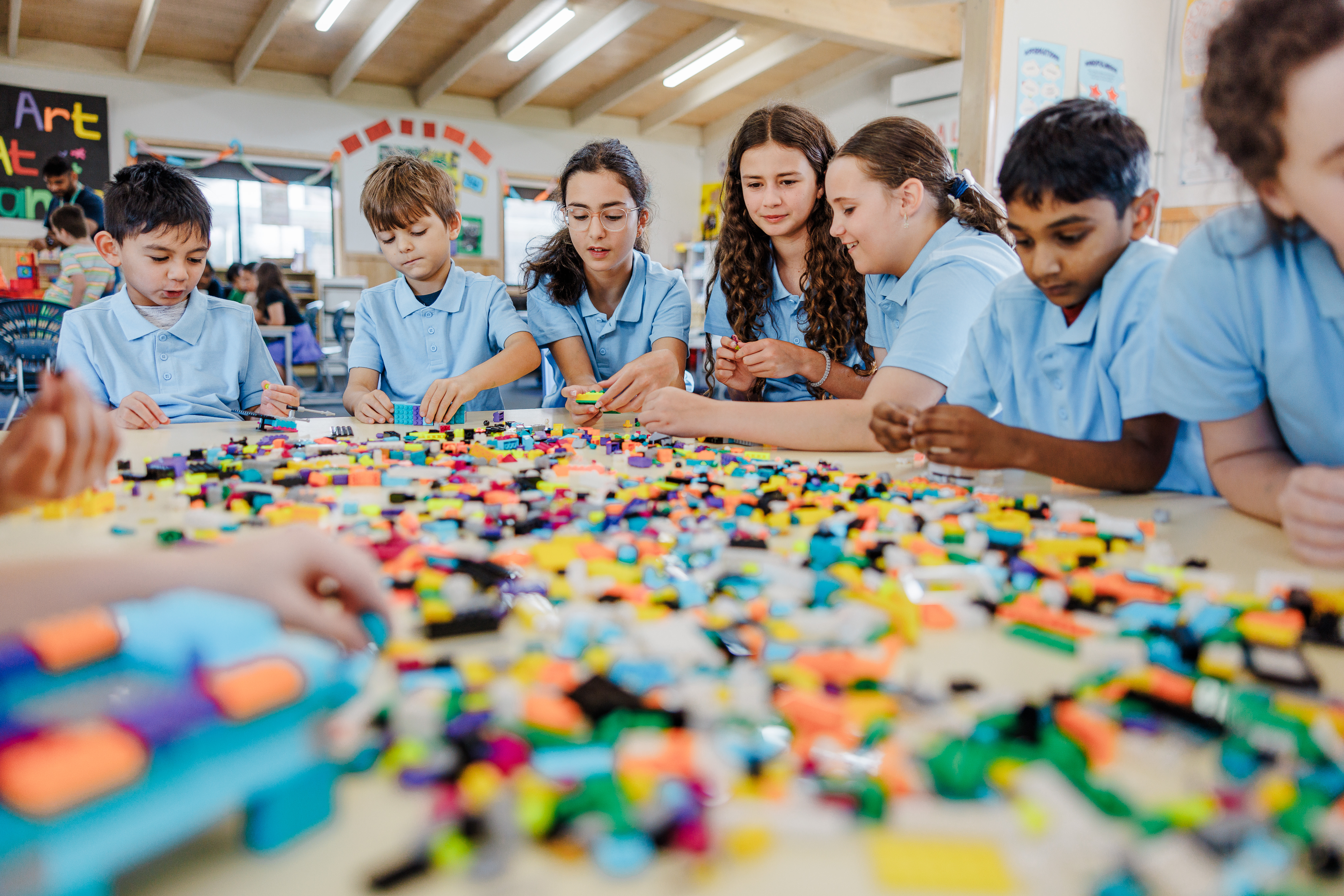
Picture this. The school bell rings. Bags drop. And instead of screens or free play or a worksheet to finish, thousands of children across Australia sit down at tables covered in LEGO® bricks and build.
Not at one school. Not in one city. At Camp Australia After School Care services nationally, on the same afternoon, as part of the same moment.
Last year, Camp Australia brought children together for a national Stop & Play moment. This year, the commitment goes further.
World Play Day falls on 11 June each year, marking the UN's International Day of Play. This year, Camp Australia is using it as an opportunity to do something tangible for their children and families.
New research from the LEGO Play Well Study paints a familiar picture for anyone working in the sector. Nine in ten Australian parents wish they could play more as a family. The same parents recognise that play builds resilience, confidence and emotional intelligence in their children. But play keeps getting pushed aside by the demands of everyday family life.
After School Care is one of the few places in a child's week where that pressure does not follow them through the door. No curriculum, no assessment. Just time and space. What a service chooses to do with that time reflects how it understands its role.
Too often, after school care is seen as a holding pattern between school and home. We reject that idea. The hours children spend with us are some of the most important of their day, and we have a responsibility to fill them with experiences that genuinely matter. Partnering with LEGO Australia to create a national play moment is not a marketing exercise. It is a statement about what we believe after school care should look like. - Craig Napier, CEO, Camp Australia
Camp Australia’s partnership with LEGO Australia reflects a shared belief in what play can do for children. Open-ended building play has been used in educational and therapeutic settings for decades because of what it asks of children: to make decisions, experiment, and bring something from their imagination into the real world.
Play gives children a way to process their world that does not require words. When a child builds something, makes a decision, knocks it over and starts again, they are developing skills that formal learning alone cannot teach. The confidence that comes from that is real and it lasts. - Kerry Evitts, Artist and Psychotherapist
On World Play Day, every child at a Camp Australia service will take part in the national LEGO play moment and go home with their own activity book. From 12 to 19 June, the celebration continues with Camp Australia's Ultimate Week of Play, where children work together toward a national goal of one million collective play minutes.
For school communities and families, it is a visible commitment to something that research says matters but everyday life makes difficult. For the sector, it raises a question worth sitting with: when children arrive at the end of a school day, what are we actually here to give them?
Camp Australia operates Before and After School Care and Vacation Care at schools across Australia. More information about World Play Day is at campaustralia.com.au/world-play-day.
LEGO and the LEGO logo are trademarks of the LEGO Group. ©2026 The LEGO Group.
Editor's note: The above article was supplied to The Educator by Camp Australia.