



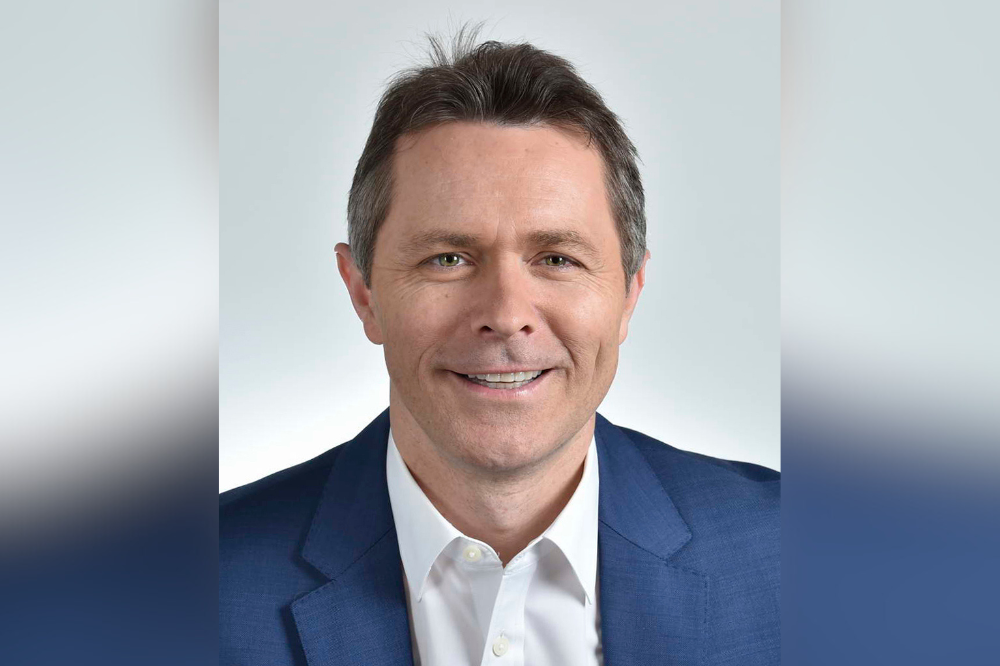
Australia's Federal Education Minister, Jason Clare, attended the Australian Education Awards last week with a clear message for school leaders. Teaching is the most important job in the world, and the Federal Government is not done reshaping the system that supports it.
In a one-on-one interview at the ninth annual gala at the Fullerton Hotel in Sydney on 7 August 2026, Minister Clare spoke to Brett Henebery, editor of The Educator, about three pressing issues facing Australian schools: artificial intelligence in the classroom, the formation of the new Teaching and Learning Commission, and the persistent inequity that continues to define outcomes for too many students.
His answers on each were honest, practical, and at times deeply personal.
AI in the classroom: support, not substitution
Minister Clare acknowledged the technology is embedded in schools but said that policy response must centre on learning integrity and student privacy.
"AI is here. It's not going away. We've got to make sure that we use it in a way that helps young people to learn. It doesn't replace their learning," he said.
Minister Clare flagged two specific priorities:
- preventing students from using AI to complete work they should be doing themselves
- ensuring AI tools do not compromise student privacy by feeding data back into targeted advertising systems
"When education ministers meet again in a couple of months' time, we're going to look at this and think about what AI is doing in our schools and what we need to do as policymakers to make sure that we get the most out of it," he said.
Researchers at the University of Technology Sydney (UTS) and the University of Queensland have already sounded the alarm. They warned that schools adopting AI tools may be moving faster than they fully understand, with studies flagging risks to concentration, memory and deep reasoning. Minister Clare's framing suggests the Federal Government intends to act on those concerns at a national level.
The Teaching and Learning Commission: A one-stop shop for teachers
Minister Clare also talked about the proposed Teaching and Learning Commission, which would bring four separate national agencies under one roof:
- the Australian Curriculum, Assessment and Reporting Authority (ACARA)
- the Australian Institute for Teaching and School Leadership (AITSL)
- the Australian Education Research Organisation (AERO)
- Education Services Australia (ESA)
"At the moment, you've got one organisation responsible for curriculum, you've got another one for teaching, you've got another one for research and the evidence that helps teachers, and then a fourth one for technology," he said. "Teachers don't experience those four things separately. They experience it together in the classroom."
The formation of the new national education body has drawn both enthusiasm and caution from across the sector. Principals and unions have called for careful implementation. Minister Clare's case for it rests on the argument that fragmentation serves no one.
Beyond structural coherence, there are workforce implications. The Commission could potentially support university-level reforms in teacher training. It could also help states and territories build the workforce they need.
'Talent is everywhere. Opportunity is not'
Minister Clare was candid when asked what needed to change for Australia to become the world's most equitable education system within a decade. He said a lot needed to change.
"I don't want us to be a country where your chances in life depend on who your parents are, or which school you go to, or where you live, or the colour of your skin. But we are today," he said.
"Education can change that. Talent is everywhere. It's opportunity that's not. And if we get our education system right, we really can bend that in favour of creating a country where there's opportunity for everybody."
He described visiting a school earlier that day where only a handful of kindergarten children had attended childcare. For Minister Clare, fixing that is where the equity agenda must begin – before formal schooling even starts.
"If we can remove the barriers that help more kids when they're little, from the poorest and most disadvantaged families, to get early education, then more kids will start ready to go, ready to learn."
He said properly funding schools and directing that funding toward proven interventions was the next step. The students who fall behind early are overwhelmingly from disadvantaged backgrounds, regional Australia, and remote communities.
"That'll also mean that more kids from disadvantaged backgrounds get a crack at university or get to go to TAFE," he said. "It'll build a fairer country."
Why the Australian Education Awards matter
Asked why events like the Australian Education Awards matter, Minister Clare paid tribute to educators.
"Because this is the most important job in the world," he said. "Our teachers don't just teach us to read and to write and to count. They shape the people that we become. I truly believe that. And so awards like this are about celebrating that. I don't think we do enough of it."
The ninth annual Australian Education Awards recognised outstanding educators across 29 categories. Read the complete list of winners on The Educator.