



It’s been another terrible year for domestic violence in Australia, with more women murdered by their intimate partners, more calls for help to emergency services, and shelters stretched dangerously thin.
With today marking this year’s International Day for the Elimination of Violence against Women, there are renewed calls for schools to do more than teach respectful relationships in the classroom in the hope that young people will turn what they learn into real action, standing up to harmful attitudes early and helping to stop violence against women before it starts.
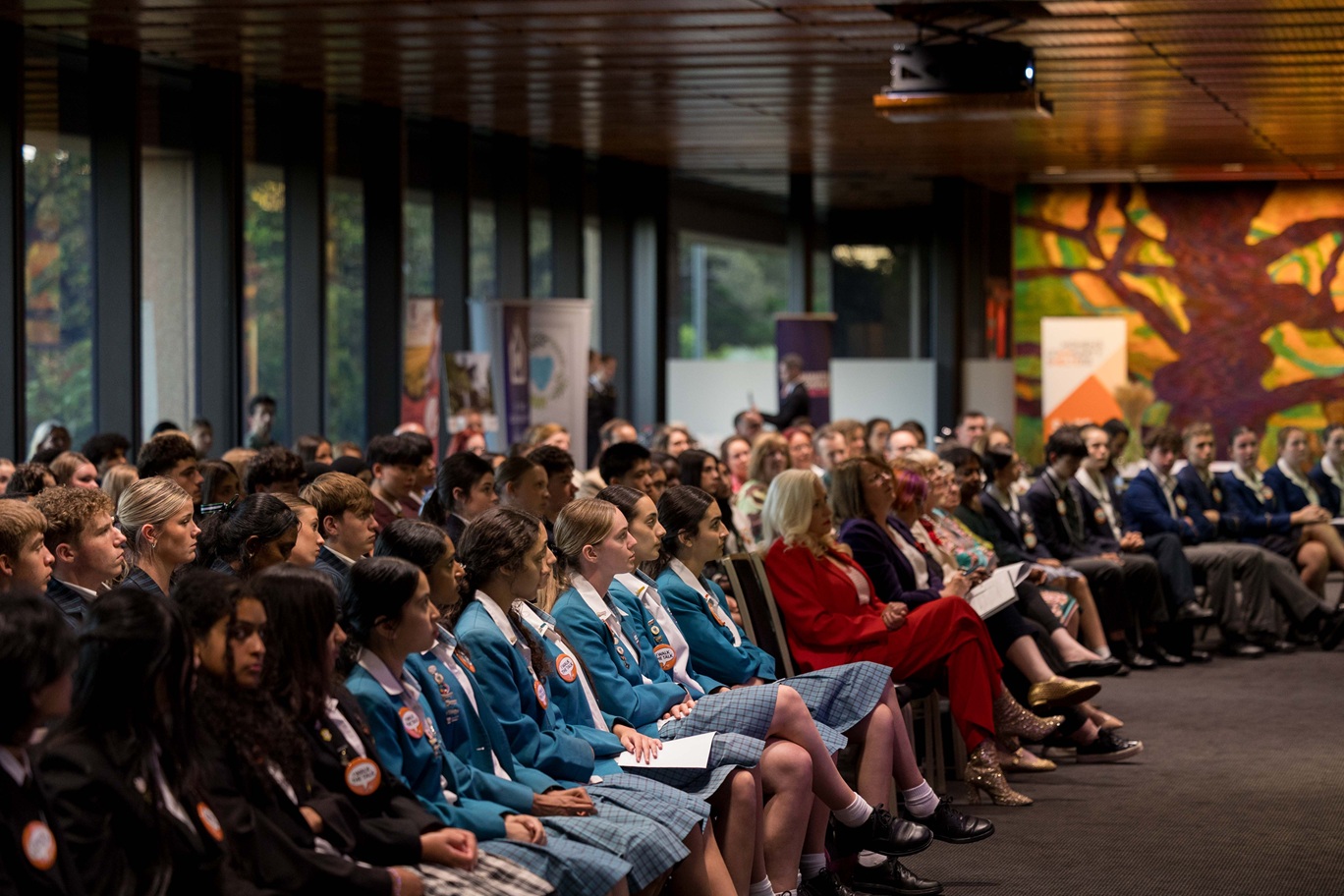
This year, more than 8,000 students from 56 NSW schools took part in Women’s Community Shelters ‘Walk the Talk’ program, which helps to educate teenagers in a meaningful way that “moves beyond theory and token gestures and into purposeful informed action”.
Together, the schools generated $380,650 in support for women and children experiencing domestic and family violence, through volunteer hours, donated goods and financial contributions. Student-led initiatives supported 13 safe havens, expanding support for women needing help.
All surveyed participants said they would recommend the program, which has now reached more than 28,000 students since it launched in 2019.
What schools are seeing on the ground
Lauren Silvestro, Relieving Head Teacher Wellbeing at James Ruse Agricultural High School, said the program has forged a meaningful bond between the school and its wider community.
“Through the Walk the Talk program our partnership with Parramatta Women's Shelter has been a model of community engagement and collaboration,” Silvestro told The Educator. “Together, we have created a supportive, positive relationship that bridges the gap between education and social service.”
Silvestro said the partnership has not only enriched her students' educational experience but also fostered a sense of connection and shared purpose with a key community organisation.
“Women’s Community Shelters and Parramatta Women’s Shelter have provided guidance and support to our school, and the relationships we have built with their team have been instrumental in the success of the Walk the Talk program,” she said.
“Their commitment to addressing domestic violence and their expertise in supporting survivors has inspired both students and staff to think critically about our role in the community.”
Tegan Amour, Student Support Officer at Taree High School, said the program was “without a doubt” one of the most engaging and impactful programs the school has implemented.
“The response from our Year 10 students has been outstanding. They have continued talking about the program long after the session finished,” Amour told The Educator. “Even teachers who weren't present have commented to me about the impact it has had on their students, simply from hearing them talk about the program afterwards.”
Phoebe Coroneo, Student Support Officer at Girraween High School, said few programs on consent and abuse have resonated with students quite like this one.
“I am absolutely lost for words for how phenomenal this program is,” Coroneo told The Educator. “This has absolutely set the bar for programs that speak about consent and abuse.”
Coroneo said the girls laughed, cried, sat shocked during moments and engaged for the entire program.
“The conversations weren't sugar-coated, but were delivered safely and respectfully,” she said. “I truly wish I'd received this presentation when I was at school.”
For Monica Bentivoglio, Pastoral Care Team at Santa Sabina College, the program is “invaluable.”
“There is nothing that you can say in a lesson situation that will ever give them something as real as contributing to a women's shelter where women in our community really need that support.”
Women’s shelters ‘under more pressure than ever’
Sue Cripps, Interim CEO of Women's Community Shelters said the organisation’s shelters are “under more pressure than ever.”
“For every woman we support, three more can’t access a safe bed, and we can’t build our way out of that alone,” Cripps told The Educator. “On the ground, school partnerships make a real difference.”
Since 2019, more than 28,000 students have participated in Walk the Talk, learning about consent, respectful relationships and how to recognise abuse. In the program’s second phase, students are activated to support their local shelter.
“We know how much that means to our frontline staff, who see their community standing behind them,” Cripps said, adding that school leaders have a role that reaches well beyond the school gates.
“What students learn about respect doesn’t stay in the classroom. They take it home, into their friendships and their relationships, now and in the future. That’s why prevention must be part of every school’s role in the community.”
The magic of service learning
Dannielle Miller OAM, Director of Education at Women’s Community Shelters, said educators are “constantly on a treasure hunt”, looking for attitudes and behaviours in their students worth celebrating and encouraging.
“Walk the Talk provides an absolute abundance of these opportunities,” Miller told The Educator. “From watching students engage so thoughtfully and respectfully with challenging conversations about consent and domestic violence, to seeing almost half a year group volunteer to become changemakers, teachers are often bursting with pride.”
Then comes the magic of service learning, Miller said.
“Students transform their learning into meaningful action, raising funds, collecting essential goods and supporting their local domestic violence shelters,” she said. “Along the way, they develop empathy, leadership and a powerful sense of their own capacity to make a difference.”
For educators with their own lived experience of domestic and family violence, the program can be particularly profound, Miller said.
“Many tell us they wish they'd had this education growing up, and that helping young people create change feels deeply healing and hopeful,” she said.
“Ultimately, Walk the Talk gives educators a front-row seat to the compassion, courage and extraordinary potential of their students. And what teacher wouldn't want to engage with that?”
If you or someone you know is experiencing domestic, family or sexual violence, call 1800RESPECT on 1800 737 732 or visit 1800respect.org.au. In an emergency, call 000.