



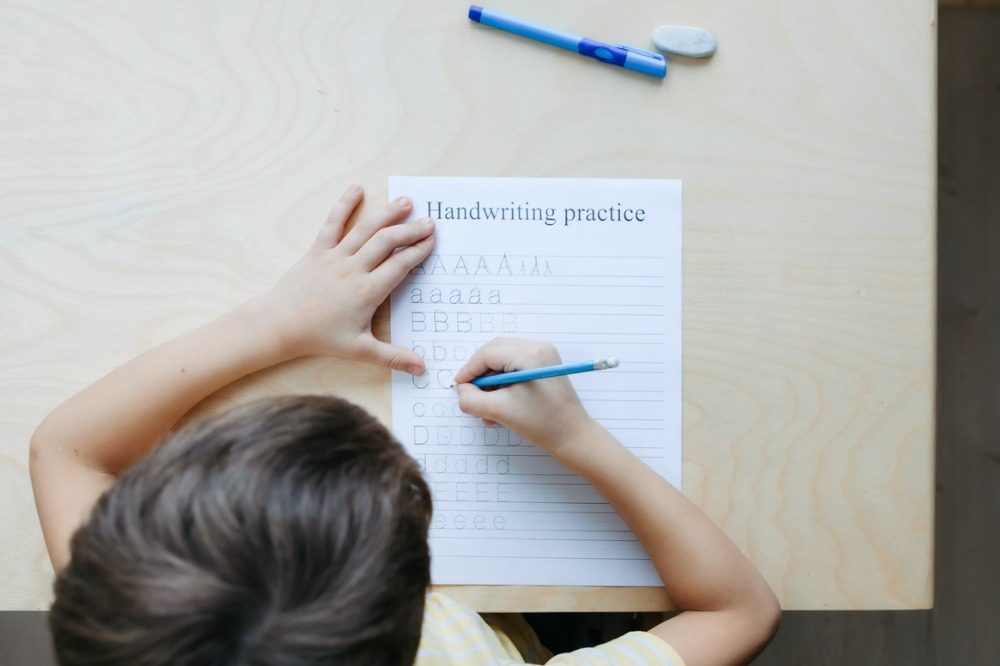
Australian students may be reaching secondary school without mastering either handwriting or typing, raising concerns about gaps in writing instruction across primary schools.
Charles Sturt University adjunct associate professor Noella Mackenzie said many students have not received enough instruction or practice to develop fluency in either skill. As a result, they may struggle to communicate their ideas effectively, regardless of whether they write by hand or use a computer.
Her warning comes as education ministers prepare to return Year 5 NAPLAN writing tests to pen and paper from 2028, bringing renewed attention to how writing skills are taught in schools.
Where writing instruction falls short
According to Mackenzie, handwriting instruction often stops around Year 3, before students have developed the automaticity needed for more complex writing tasks.
At the same time, the increasing use of computers in classrooms has not necessarily been accompanied by systematic keyboarding instruction. This can leave students struggling with both methods rather than becoming proficient in at least one.
A survey of 310 Australian primary school teachers previously identified similar gaps in writing instruction. Most respondents reported not teaching typing, while handwriting, planning and revision strategies received relatively little attention.
Mackenzie also pointed to a study involving Year 7 students, including one who described receiving insufficient instruction in both handwriting and keyboarding during primary school.
“At my primary school I was kind of taught half and half… no classes that focused on one or the other, which was bad because it meant that I didn’t learn enough keyboarding skills to be good at keyboarding, and… I didn’t get enough handwriting skills to be good at handwriting, so I’m kind of in a, what do you call it—a pickle?”
Why fluency matters beyond handwriting
The consequences extend beyond how quickly students can put words on a page.
Mackenzie explained that when handwriting or keyboarding has not become automatic, students must devote more mental effort to the mechanics of writing. This increases cognitive load, leaving fewer resources available for planning, organising and expressing ideas.
The method students use can also influence their performance, particularly when they are more comfortable with one format than another.
A meta-analysis led by Edith Cowan University found that primary school students generally produced higher-quality writing by hand than when using keyboards.
However, Mackenzie noted that examination results can be comparable between the two methods when students are sufficiently proficient in their chosen format.
This distinction has become particularly relevant to NAPLAN, where changes to the writing assessment format are being considered across multiple year levels.
Under the agreement between education ministers on 2 November 2026, Year 5 writing tests will return to paper in 2028. This is subject to further advice on feasibility, costs and workload implications. Ministers have also requested advice on extending handwritten assessments to Years 7 and 9.
While the changes may affect how students demonstrate their writing abilities, Mackenzie argued that the underlying priority should be developing proficiency in both methods.
“The debate should not be about handwriting versus typing—students need both. Whatever method is required, schools must teach it well and provide enough practice,” Mackenzie wrote.