



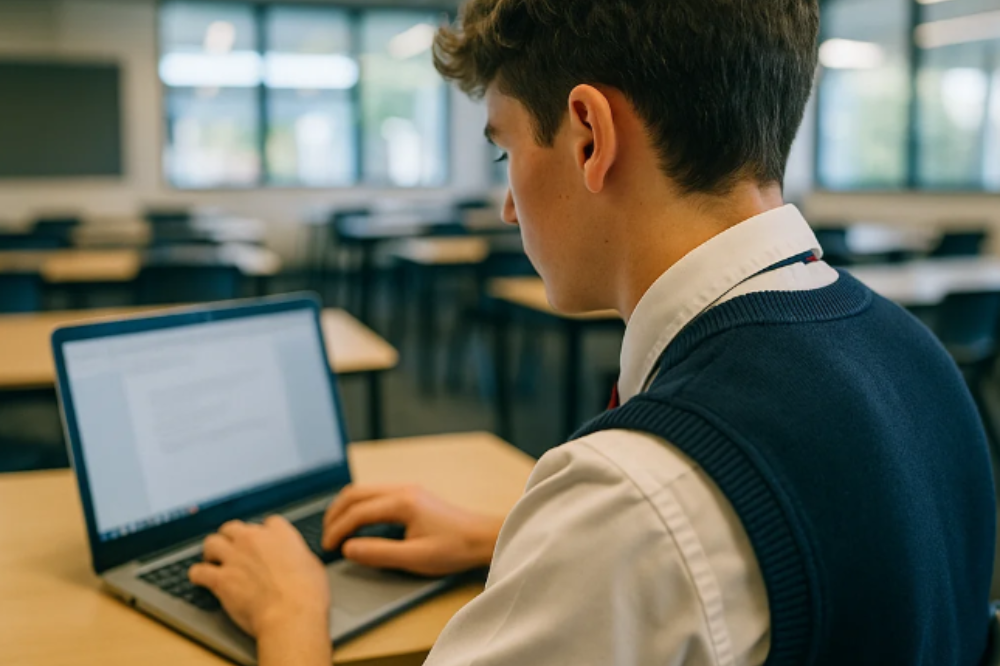
When Cluey Learning launched Cluey Plus this October, the move was about more than entering Australia’s crowded educational technology market. The harder question — the one school leaders now need to confront — is what kind of AI learning tools students are actually using.
Cluey Plus is a curriculum-aligned platform for students in Years 2 to 12. It is built around the assessment frameworks of every Australian state and territory. Where most general-purpose tools are designed to produce an answer, Cluey says its platform guides students through concepts rather than bypassing them. The goal is to build the reasoning and independence students need beyond any single exam.
“AI is already part of how students study, research and complete homework,” Matteo Trinca, chief executive of Cluey Ltd, Sydney, said. “Pretending they won’t use it is no longer realistic. The more important question is what kind of AI they’re using.”
What do students — and parents — actually need from AI learning tools?
Trinca frames the platform not as a technology pitch but as a response to a practical problem facing families right now. For many parents, the challenge is not access to tools. They need to know that what is being used is doing something genuinely useful.
“Parents aren’t looking for technology for technology’s sake,” he said. “They’re looking for confidence that they’re giving their child the right support at the right time.”
Families invest heavily in tutoring, apps and study tools. Yet they often have little insight into whether those resources build genuine understanding or simply produce completed assignments — until school reports arrive.
A Universities Admissions Centre (UAC) survey of more than 20,000 Year 12 students reinforced the urgency. One in three Year 12 students expects their university course to teach them practical AI skills. That suggests many school leavers do not yet feel equipped to use these tools effectively.
How should AI tools support learning without replacing critical thinking?
“Supporting students isn’t about removing challenge from learning,” Trinca said. “Students still need to think critically, solve problems and develop resilience. Technology should help build those skills, not replace them.”
Cluey Plus sits alongside the company’s live one-to-one tutoring service, positioning AI as a complement to human instruction rather than a replacement for it. The platform covers Maths and English for Years 2 to 10, extending into Chemistry, Physics and Biology for senior students in Years 11 and 12. The emphasis throughout is guided learning — hints and worked steps — rather than generated answers.
Australia’s national framework for generative AI in schools encourages exactly this kind of purposeful use. It prioritises tools that build capability rather than replace the thinking students need to develop for themselves.
That distinction matters as students move into a workforce where AI capability is expected alongside independent judgement. The question for school leaders is not whether students use AI learning tools. It is whether the tools they reach for are built to make them better thinkers — or simply faster finishers.