



The end-of-year exam period is one of the most stressful, high-stakes times in a young person’s schooling.
In South Australia, where more than 13,000 students will be sitting their Stage 2 SACE written examinations on 2 November, that pressure is already building.
The Universities Admissions Centre’s Student Lifestyle and Learning Report 2026, which surveyed 20,813 students, found 73% of Year 12s identified staying motivated as a challenge, while 59% cited pressure to achieve a particular exam result or ATAR.
Read more: Is effort aversion holding your students back?
So how can schools encourage students to strive for excellence while helping them navigate uncertainty, learn from mistakes and avoid the pressure to be perfect?
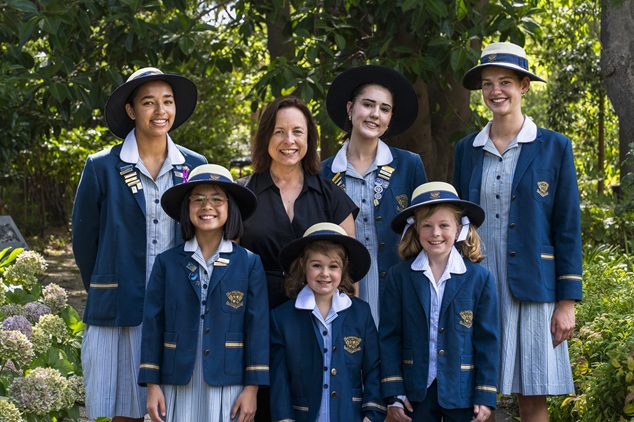
At leading SA girls’ school Loreto College Marryatville, Principal Kylie McCullah has built a culture that does just that. In the 2025 examinations, every student completed the SACE and 66.7% of grades were in the A band. The school ranks fifth in the state for the percentage of students achieving an ATAR of 99 or above.
‘Success is not about being perfect at everything’
For McCullah and her leadership team, building this culture has been about striking the right balance between high expectations and wellbeing.
“For us, it is about balance, not burnout,” McCullah told The Educator. “Academic excellence matters, and we want our students to work hard, take responsibility for their learning and strive to do their best. But a Loreto education is about much more than results.”
McCullah said the school wants its students to embrace every part of school life, not just the classroom.
“We want our girls to be involved in service, sport, visual arts, performing arts and the many clubs and opportunities available to them,” she said. “Our holistic approach recognises that these experiences are equally important in shaping confident, capable young women.”
McCullah said success “is not about being perfect at everything”.
“It is about showing up and embracing opportunities, learning from setbacks and developing the confidence to give things a go.”
Discomfort as a path to growth
McCullah said learning to sit with discomfort is one of the most important skills a young person can develop. She says this is particularly true for girls, who often face unique pressures when stepping outside their comfort zone.
“Discomfort is an unavoidable part of the journey, whether it is tackling complex ideas in the classroom, navigating shifting friendships, or stepping into leadership roles,” she said. “For girls, this can be especially daunting.”
McCullah pointed out that societal expectations and deeply ingrained stereotypes often urge girls to prioritise harmony and perfection, making the act of confronting discomfort seem more like a threat than a path to growth.
“Girls’ schools play a vital role in countering this narrative,” she said. “While free from the need to compete with boys for grades, attention or leadership opportunities, girls' schools are far from ‘comfortable’ in the conventional sense. In fact, they are intentionally challenging.”
McCullah said these are environments where girls are expected to speak up, take risks, lead boldly, and be visible - sometimes long before they feel ready.
“It is by engaging with this kind of discomfort – purposeful, developmental, and affirming – that girls build the strength, emotional intelligence, and problem-solving skills they need to thrive.”
‘What matters is our willingness to learn’
When it comes to leading her staff, McCullah practises what the school preaches. She says making mistakes and trying new things isn’t just something students should embrace, but something teachers and leaders must be willing to do too.
“Whilst no one enjoys making mistakes, particularly in public, I value staff who are willing to step out of their comfort zone, challenge their own thinking and continually refine their practice to improve students’ learning experience,” she said. “I believe my role as Principal is to foster a culture where staff feel trusted and supported to explore new approaches, reflect and learn from the outcomes.”
While not every new approach may deliver the results the leadership team hoped for, McCullah said each provides an opportunity to reflect and strengthen the school’s practice.
“What matters is our willingness to learn, improve and keep moving forward,” she said. “If we want our students to see productive struggle as an essential part of learning, we need to model that same openness to growth as educators and leaders.”
One message, at home and at school
McCullah acknowledged that a disappointing result rarely stays at school. When students bring their setbacks home, she says, the strength of the school’s partnership with families can make all the difference in how they respond and recover.
“At Loreto, we want every student to experience a strong sense of belonging, and our families to see us as trusted partners in their daughter’s education,” she said. “A student’s journey through school will not always be smooth, and disappointing results are part of that experience.”
When challenges arise, the relationships staff have built with families become particularly important, McCullah said.
“We are at our best when students are supported both at home and at school, with a consistent message: we believe in them, setbacks are part of learning, and together we will help them move forward,” she said.
“Our role is not to remove every obstacle or disappointment, but to ensure each girl has the guidance and confidence to navigate these moments and emerge stronger from them.”