




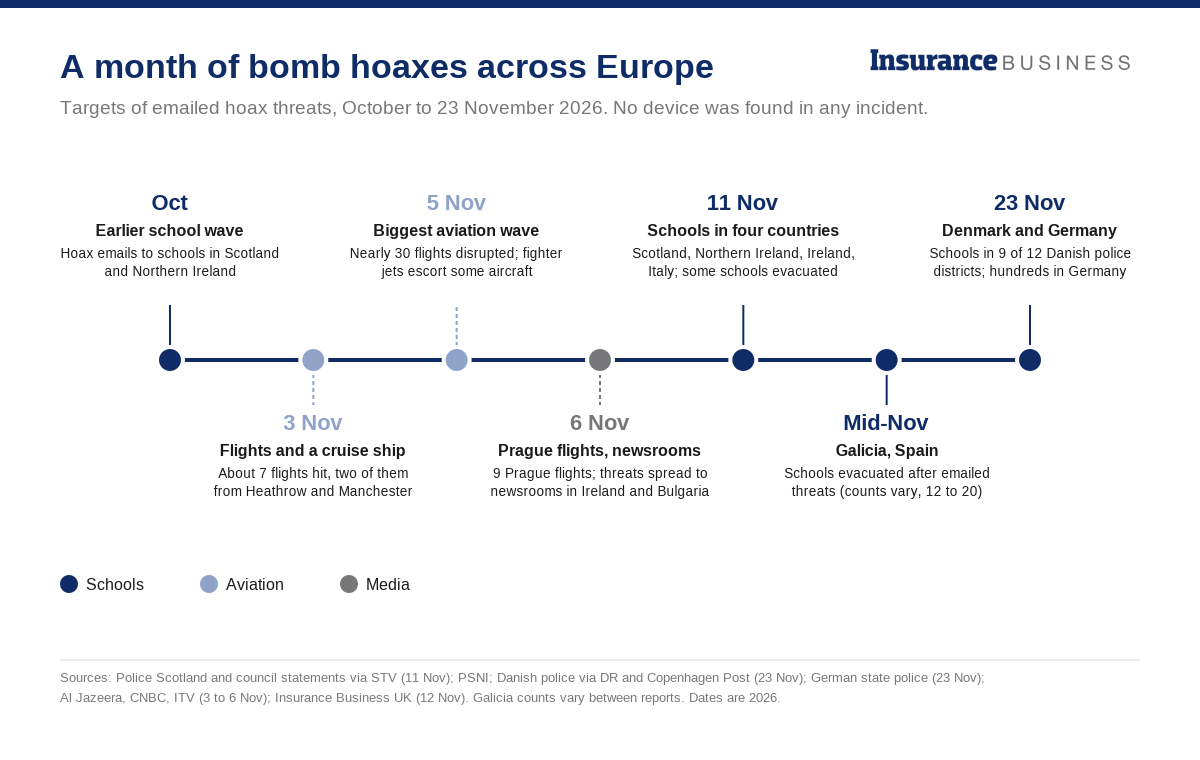
Schools across Denmark opened their inboxes this morning to an email claiming a bomb had been planted on site, the same stunt pulled on schools in Scotland, Northern Ireland, Ireland and Italy less than a fortnight earlier. By mid-morning, police in at least nine of Denmark's 12 districts were dealing with reports, and one Jutland force said it had received hundreds of them.
The official line was keep calm and carry on. Danish police said they did not regard the threats as credible, saw no reason to evacuate and asked schools that had only received the email not to file a separate report. Schools were told to call in only if staff spotted a suspicious object or person.
Germany was also hit this morning. Police in Baden-Württemberg said the same message had gone to more than 450 schools across the state, while forces in Thuringia and Lower Saxony reported their own cases. Thuringian officers advised against evacuating, though a handful of schools sent pupils home anyway and patrols were sent to check on them.
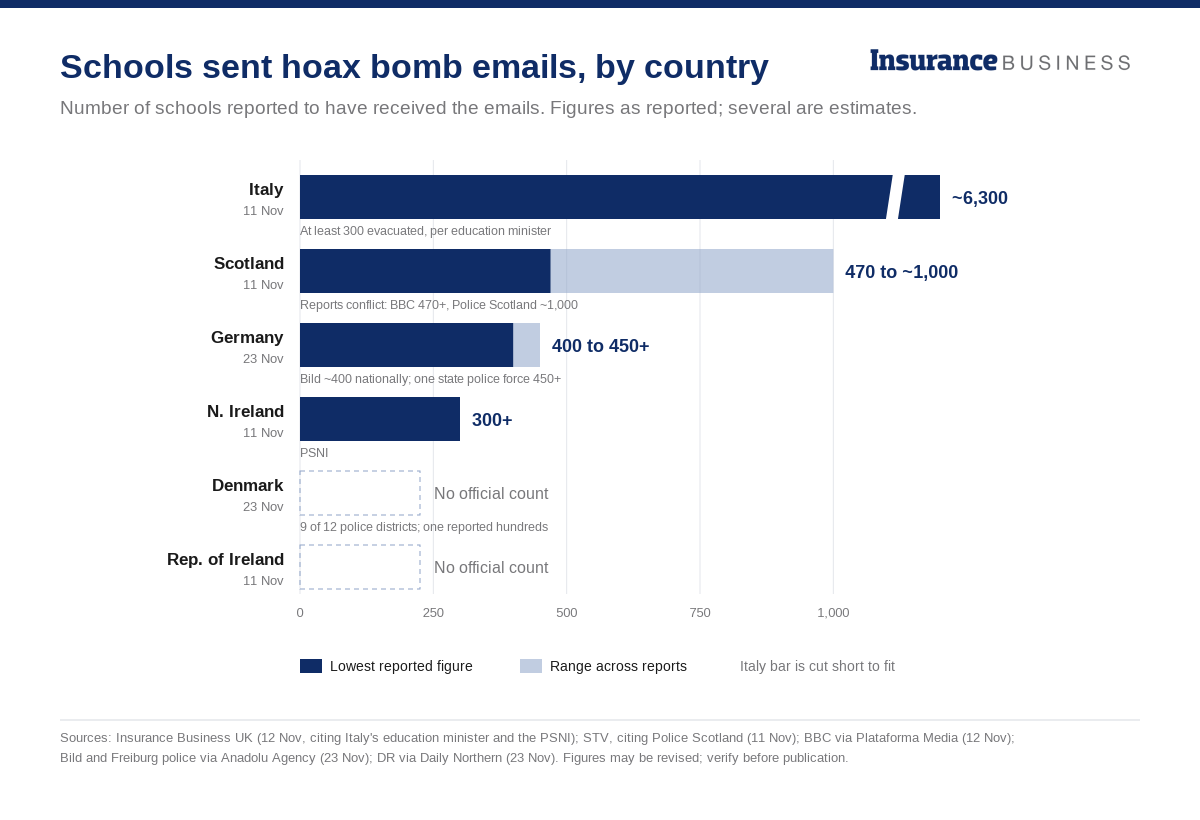
On November 11, schools across Scotland, Northern Ireland, the Republic of Ireland and Italy received a near-identical hoax. Police Scotland said the messages had been sent to distribution lists across the UK, assessed immediately and treated as hoaxes, with its Cyber and Fraud Unit trying to trace the sender. In Northern Ireland, the PSNI said more than 300 schools had reported the email and that it came from outside the UK. Several Scottish councils, including Edinburgh, Fife, Perth and Kinross and Inverclyde, still saw some schools evacuate or lock down as a precaution. Scotland had already been targeted in a similar wave only weeks earlier.
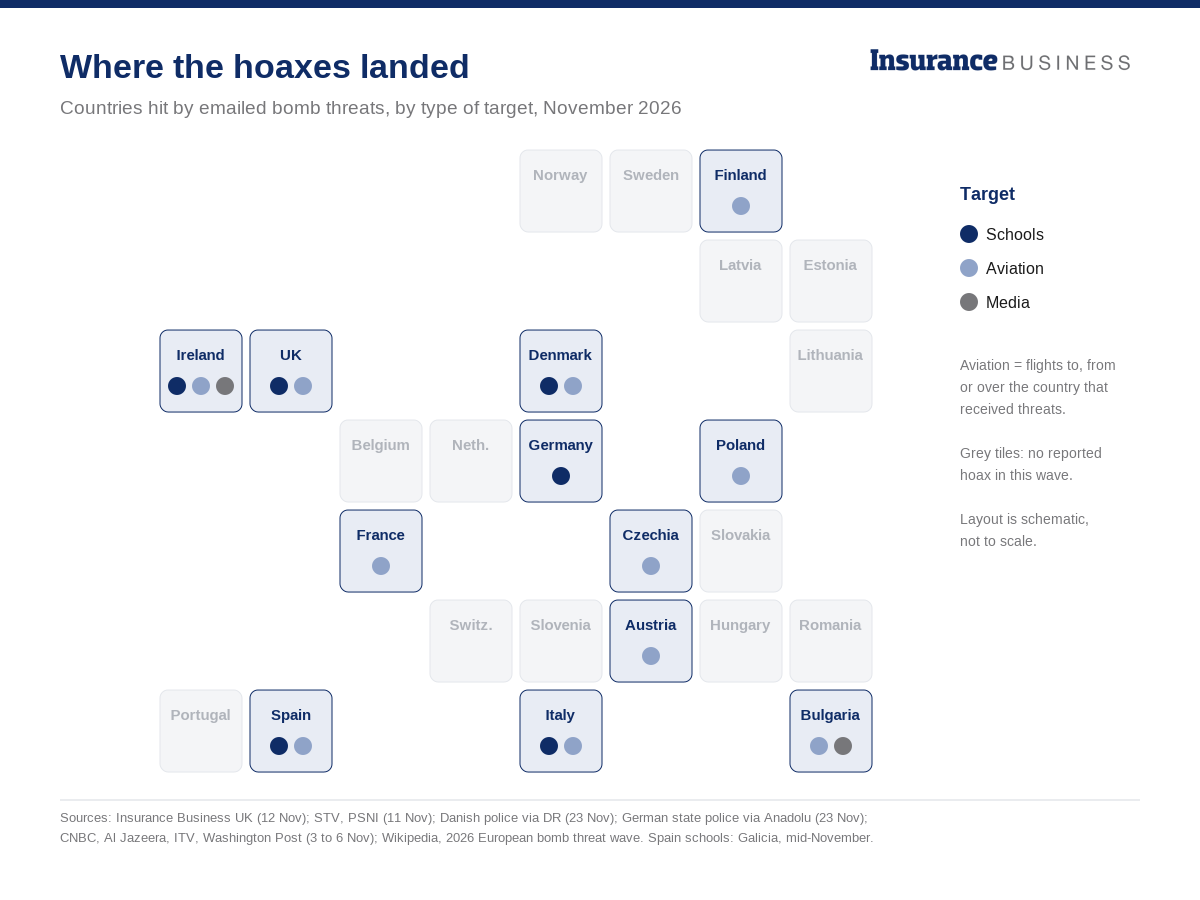
Schools are only part of the picture. In the first week of November, hoax threats hit dozens of flights across Europe, forcing diversions, searches and, in some cases, fighter jet escorts. Newsrooms in Ireland and Bulgaria were also targeted. No device has been found in any of the incidents, and no government has publicly named who is responsible.
From one-off scare to background noise
In Denmark, Monday's advice was effectively to note the email and carry on. That reflects official thinking in the UK too: the government's guidance on bomb threats says most threats are hoaxes meant to cause alarm and disruption, and asks organisations to judge credibility before deciding whether to search, evacuate or stay put.
Each wave that turns out to be fake makes the next one easier to dismiss, and that creates its own problem for anyone responsible for a building full of children or members of the public. Over time, the bigger danger becomes underreacting rather than overreacting. If a genuine threat ever arrives in the same format, the person who decided to ignore it will want a documented, defensible process behind them.
A school or venue with a written bomb threat plan, clear lines on who makes the evacuation call and records of how each decision was reached is far better placed if something goes wrong. ProtectUK, the police-run counter-terrorism advice platform, sets out when evacuation, invacuation or lockdown makes sense, and the Department for Education has its own school and college security guidance.
Nothing happened, but someone still pays
Even when nothing happens, a hoax still costs money. There's lost teaching time, staff overtime, extra security, cancelled events, and parents who've had to duck out of work early. The catch is that standard property and business interruption insurance is generally built around physical loss, and an email hoax doesn't cause any.
So now's a good time for Principals and business managers to pull out the school's policy while things are quiet, and check what it would and wouldn't cover if a threat ever forced a closure.
*The original version of this story first appeared in The Educator's sister publication Insurance Business.