



Every July, classrooms across Australia come alive with NAIDOC Week celebrations – artwork on the walls, guest speakers, special assemblies. But when the bunting comes down, First Nations stories too often disappear from the curriculum until the following year.
It's a pattern Oxford University Press Australia is hoping to break.
The publisher's refreshed Yarning Strong series is encouraging schools to embed Aboriginal and Torres Strait Islander perspectives into everyday learning, arming Years 3–6 teachers with classroom texts by celebrated First Nations authors – including Anita Heiss and Bruce Pascoe – alongside curriculum-aligned lesson plans exploring themes of Family, Identity, Land and Law.
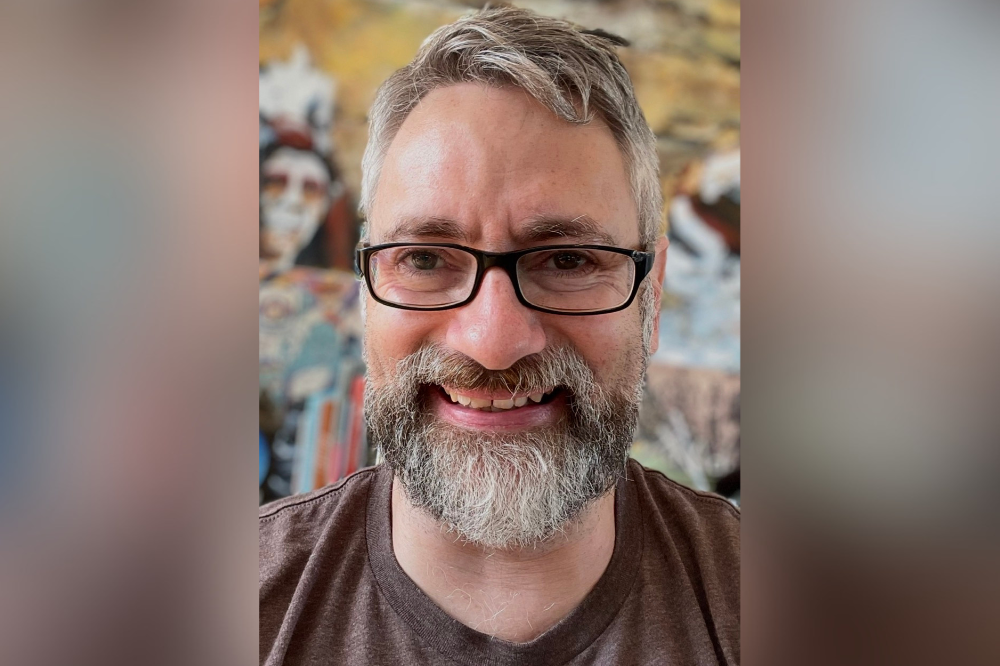
For Bigambul and Mandandanji author and illustrator Dub Leffler, whose work features throughout Yarning Strong, the series is about more than just great storytelling – it's about Aboriginal and Torres Strait Islander students seeing themselves in the books they read, and all students building understanding, respect and connection.
For non-Indigenous teachers who want to bring First Nations perspectives into their classrooms respectfully – but feel unsure how without lived experience – the series offers a practical way in.
‘It’s hard to be what you can’t see’
Leffler said that when she was at school, the only books she could connect with were the Dick Roughsey & Percy Trezise books like The Rainbow Serpent and The Quinkins.
“Even then, this connection was limited because they weren't modern stories and they only represent certain Aboriginal groups,” Leffler told The Educator. “Because of the lack of positive Indigenous stories from all parts of Australia, it's hard to be what you can't see.”
Leffler said children are “reading blind” in this sense because they’re searching within stories for heroes that, for the most part, aren't there.
“They're [Indigenous heroes] either edited out of stories or forgotten about entirely,” he said. “When you read about heroes like you, the impossible becomes possible.”
Another obstacle is that plenty of non-Indigenous teachers want to bring First Nations perspectives into their classrooms but are concerned that they will get it wrong, so they end up doing nothing at all.
For teachers who are stuck in that spot, Leffler’s advice is “don't be afraid to get it wrong and say this up front”.
“It's ok not to know about a topic. This can be a discovery that gets the whole class involved,” he said. “Teachers already know where to find what resources exist out there – whether it's getting in touch with the local people or reading historical texts and the internet.”
However, Leffler pointed out that there is a limit to what this can achieve, because a lot of Indigenous culture has been lost and/or is fragmented.
Leffler said that by encompassing these points – combined with what cultural knowledge we do know – into the topic of First Nations perspectives, it becomes holistic.
“When Teachers share what they have learnt in real-time with their students, they automatically see the benefit of learning and the getting of wisdom,” he said. “The story of Australia's Indigenous peoples is an evolving tale that involves everyone – especially educators.”
Built with — and for — teachers
Oxford University Press Australia Senior Learning Designer for Primary Product Geraldine Corridon said the material in the anthologies has been carefully chosen in collaboration with the First Nations reviewers and academics working on the series, who advised on what should be included and what needed to be updated or removed.
“We also spoke to non-Indigenous teachers about what topics they wanted to understand more about,” Corridon told The Educator. “I think it’s important for students to be engaged and aware of important events happening around them and Yarning Strong offers new material to support discussion about these topics.”
To support teachers, the series includes resources like lesson plans and background information that have been written by and/or reviewed by First Nations teachers and academics, Corridon added.
“These help teachers to structure their lessons, answer tricky questions and facilitate a culturally safe discussion.”
'It felt like the story was writing itself'
Before the second edition was started, Corridon said the project was discussed with Emily Yates, who is the chair of The Oxford First Nations Advisory Board.
“She explained how important it is to hear from people across Australia, so working collaboratively with our reviewers we sourced a wide range of new material from diverse perspectives,” she said. “We also worked with our reviewers to remove offensive outdated terms used in older newspaper articles and historical sources that were in the first edition.”
Corridon said some editorial decisions required particularly careful handling.
“In a drama script in one of the anthologies, we left the language there [with the reviewers’ support], but included a warning and explanation, so that teachers can explain why racist language and stereotypes are unacceptable in any context,” she said. “The anthologies include a collection of song lyrics, poems, artwork and recounts.”
Corridon said some new pieces were also commissioned, such as the story in the Land Anthology written by Caitlin Smith, a Bunjima woman from WA.
“We told Caitlin we were including more stories from people around Australia for years 3-6 students, and she wrote a beautiful piece about her experiences working out bush as a geologist,” she said.
Corridon said she asked Caitlin how she found working on this story, and was told that while she thought it would be hard to write again after so many years away from the practice, this was not the case.
“She said: ‘working as an exploration geologist has been such a rewarding experience and the words came out easily. It felt like the story was writing itself and I was just a conduit, it was a very old familiar feeling, and I knew I could trust the story.’”