



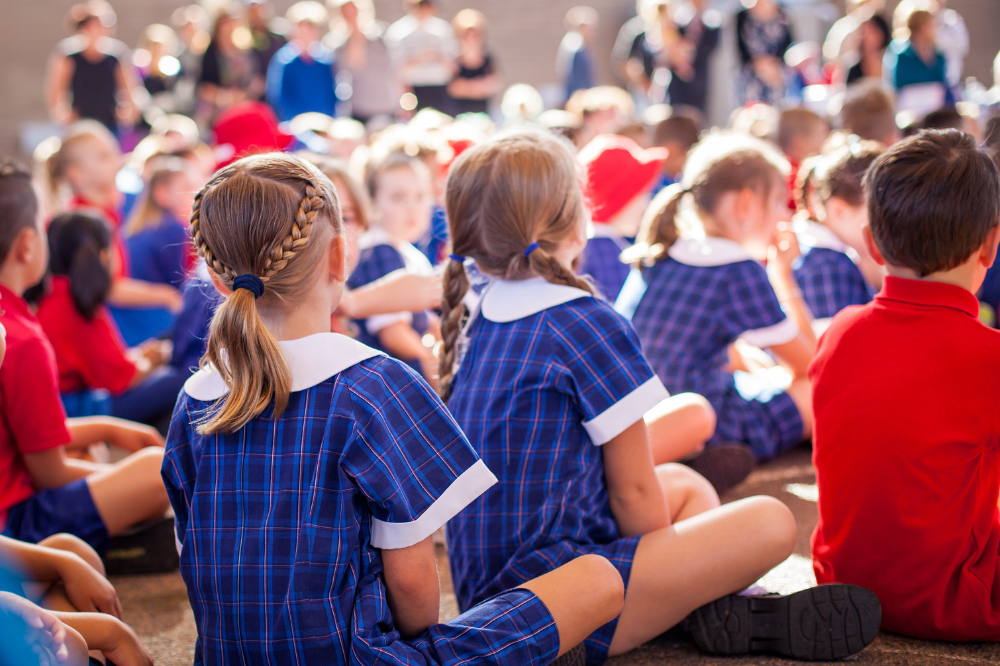
For some students, the biggest barrier to walking through the school gate each morning has nothing to do with ability, attitude or ambition. It's something far more basic – a uniform that doesn't fit, shoes that have worn through, or a family budget stretched too thin to replace either.
It's a quiet problem, but a consequential one. When a child feels visibly different from their peers, confidence suffers, participation drops, and long-term outcomes can follow them down.
For nearly a century, State Schools Relief (SSR) has been working to remove these barriers, providing practical, dignified support to Victorian students and families through schools and government partnerships. Each year, SSR works with around 1,400 schools and community organisations across the state.
SSR’s 2025 Impact Report shows the organisation supported more than 68,000 students across 1,340 Victorian schools in 2024-25, distributing more than 267,000 essential items and saving families $7.9m. Programs expanded significantly, including Glasses for Kids (up 95% in screenings) and laptops (up 74%), with total impact since 2016 surpassing $61m.
A second engine for social good
In 2026, SSR is building on its supports for schools with the launch of Equal Threads – a purpose-led uniform business that transforms everyday purchases into measurable social good. Under the model, all funds from Equal Threads will be reinvested back into SSR, helping more Victorian students access the essential items they need to fully participate in school.
The move comes as growing cost-of-living pressures continue to squeeze family budgets, driving up demand for practical, discreet support – and highlighting the need for a more sustainable way for SSR to meet that demand over time.
While SSR will continue to deliver its trusted, frontline support, Equal Threads creates a second engine, generating funding that allows that support to reach further and scale responsibly.
“We’ve always supported families in crisis, but increasingly we’re helping households quietly managing under real pressure where cost-of-living isn’t an economic headline but the difference between a child having the right shoes and warm clothing to get to school,” SSR CEO Andrew Cameron told The Educator.
“Last year we fulfilled 99,141 applications and all of our lead indicators point to demand being forecast to keep growing.”
Cameron said that if anything surprises with regards to requests from families, it’s how broad ‘essentials’ for students has become.
“Beyond uniforms and shoes to laptops for students without a device, iPads that help non-verbal students communicate, and items to help children return to school after a natural disaster,” he said. “We’re working to support schools’ requests for support for their students, at the greatest scale we can.”
Getting ahead of the problem
Cameron said that when joining as CEO last year, a few things came into focus quickly.
“We’ve set monthly demand records for eight months running — a positive sign re how well our school network is operating — and it’s natural to ask what happens as need keeps growing,” he said. “We wanted to get ahead of that, rather than lean on any single funding stream.”
Cameron said the School Saving Bonus was a good example of what SSR can achieve with government.
“When the Victorian Government ran it, families used our store in significant numbers for extra uniform items, and every dollar generated was reinvested into supporting students. It showed our purpose-led uniform business could generate reinvestable funding at scale,” he said.
“So Equal Threads isn’t a reaction to something breaking. It’s a deliberate next step. We’re building a second engine to fund the supports schools rely on which can keep growing with demand. After nearly a hundred years, diversifying how we fund our work is simply the right thing to do.”
Where the margin actually goes
Not everyone will take the launch of a commercial arm at face value — charities venturing into business have long attracted scepticism about mission drift, and school leaders could be forgiven for wondering whether Equal Threads risks becoming a distraction from SSR's core work rather than a way of strengthening it.
Cameron is quick to reject that reading.
“Equal Threads helps ensure State Schools’ Relief can keep doing its important work well into the future,” he said. “Our purpose hasn’t changed, only how we fund and sustain it.”
Cameron said schools will access support exactly as they do now.
“Equal Threads runs alongside that support to schools, it doesn’t compete with it,” he said. “Almost every week a principal asks me how they can help, and school fundraising will always be part of our relationship with schools.”
Cameron said Equal Threads simply gives principals and business managers another practical option: when a school or business chooses purpose-led uniforms and basics, the margin comes back to support students.
“It’s not about competing with the arrangements schools already have,” he said. “It’s about turning everyday purchases into funding for students who need it.”
Cameron said SSR’s status as a registered charity means that flow is transparent and reportable.
“Our partners can see the impact their spend creates,” he said. “Ultimately, Equal Threads will help to ensure State Schools’ Relief is still here for students walking through each principal's school gates for decade to come.”