



By Cat Rodie
In principle, the federal government’s digital duty of care is a good policy that is long overdue. Requiring platforms to find and reduce foreseeable harm, rather than leaving families to deal with the fallout, is exactly how it should be.
It deserves to pass.
Meanwhile, since the under-16 social media ban came into force in December, more than five million accounts have since been removed, deactivated or restricted. The federal government has moved to double the maximum penalty for platforms to $99 million and give the eSafety Commissioner stronger powers to make them prove they are complying.
If it passes, the digital duty of care will go some way to making the digital landscape a safer place to navigate.
But there is more to keeping young people safe online than reducing the harm done. We also need to equip young people with robust media literacy skills so that they can assess what they see online and determine if it’s credible, who made it, and why. And while a National Media Literacy Strategy is underway, it will not be completed anytime soon.
In the meantime, the gap has a measurable cost. Research released this year by Western Sydney University, based on a survey of more than a thousand young Australians, found a worrying consequence of the social media ban. While only one in four reported a significant change in social media access, among those, one in two say they are now getting less news. This means that for some young people, the ban has reduced their ability to learn and engage with both local news and world events and issues.
The WSU research shows that while young people are reasonably good at explaining how digital media works, this understanding does not necessarily show up in their behavior, in fact the report shows that young people are unlikely to engage in news verification behaviours regularly. This means that almost half of young people are rarely or never taking part in activities such as actively checking who posted or created a story, using multiple sources to fact-check, using a reverse image search tool to check the authenticity of an image and changing news sources when there are concerns about trustworthiness.
So a robust media literacy strategy will need to move students from how it works to how to act, and the most reliable way I know to do that is to put them in charge of publishing.
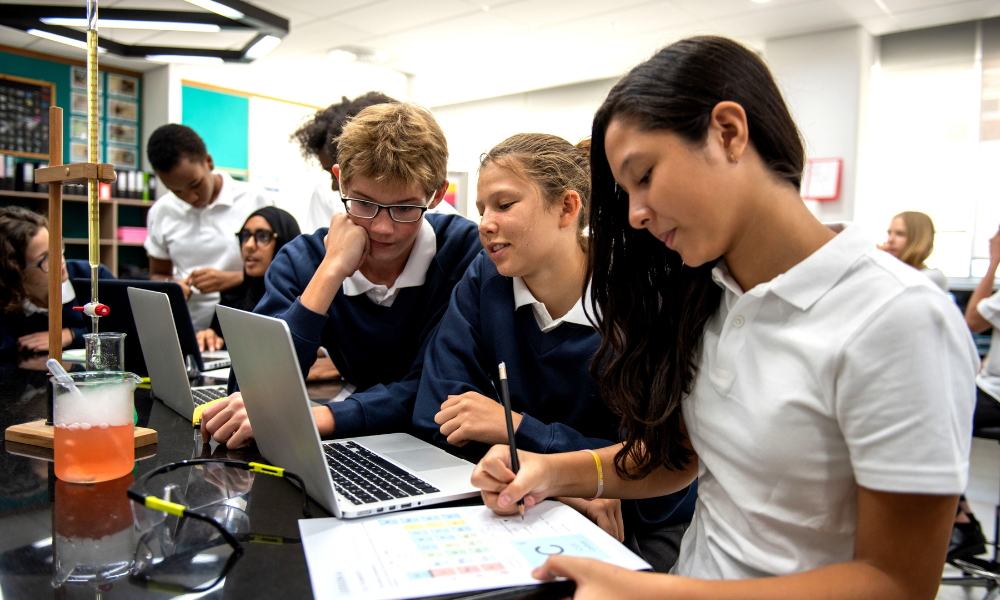
During the School News Project programs I run, primary school students spend a term making an authentic school newspaper.
They decide what to write about, they do the research, the interviews, the writing and crucially the fact checking. They check because their name is going on it and the whole school will read it. Verification isn’t just a theoretical lesson, it’s a necessary part of the publication process. It turns the theory into habit.
That kind of learning is rare. Only a quarter of students learnt how to create their own news story at school last year. Only one in five has a student-run publication. And school is where this reaches the children who get nothing at home: among young people who use news made for their age group, the most common reason they give is that it arrives through the curriculum.
Two things would help. Hasten work on the media literacy strategy, and fund making, not just studying media: student newsrooms, authentic student-led school newspapers, and time in the timetable to run them.
Young people have asked for this themselves. Three-quarters say news organisations have no idea what their lives are like. Fifty-seven per cent want news made for people their age. Asked what they would like taught at school, the most common answer was how to tell what is true.
Putting students in a newsroom is not just about giving young people a platform to share their own news. When we put students in a newsroom, we are putting them in the best place to build the critical thinking skills Australia’s tech policy agenda is counting on.
Cat Rodie is the founder of School News Project, supporting primary students to make their own news publications.