



Some schools spend years chasing a single award. Haileybury picked up eight in one night.
At the 2026 Australian Education Awards on 7 August 2026, the school swept the non-government categories for Secondary School Teacher of the Year, Primary School of the Year and Regional School of the Year, then added five Excellence Awards to the tally. But it was the final announcement of the evening that stopped the room. Haileybury had been named the Campion Education Australian School of the Year.
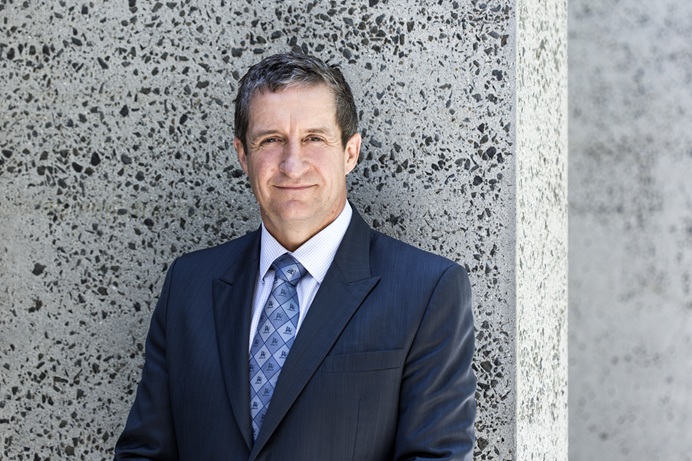
For Haileybury’s CEO and Principal, Derek Scott, who accepted the same award at the inaugural Australian Education Awards back in 2018, the experience might have felt like déjà vu. Yet for all the familiarity of standing on that stage again, Scott was quick to point out that this year's win reflects something far more significant than a repeat performance.
‘Teachers in great schools are curious about their practice’
“Haileybury’s pillars of academic excellence, social justice, international outlook and enterprise and entrepreneurship are central to everything we do and are underpinned by brilliant teachers who deliver the high-quality learning that defines a Haileybury education,” Scott told The Educator.
“Teachers in great schools are curious about their practice, pedagogy, curriculum, and the world around them. They inspire their students and instil the idea that learning doesn’t stop when you leave school.”
While the rest of the education sector debates the merits of explicit instruction, Haileybury settled the question 20 years ago.
“In building strong literacy and numeracy skills first, students are then able to engage fully with a knowledge-rich curriculum which gives them the basis on which to build their critical and analytical thinking skills as they move through the middle school and senior school,” he said.
“I also think great schools encourage an entrepreneurial mindset and teach students the importance of being part of a community and helping others.”
Scott said students need opportunities to venture beyond the school gates to understand some of the challenges affecting communities and think about how they can be part of a solution and really make a difference.
“A great school is also one that supports student wellbeing, not through individual programs, but through a comprehensive, fully integrated focus on student wellbeing by all staff.”
Getting the balance right
Asked what he believes sets Haileybury's teaching and learning culture apart, Scott pointed to the delicate balancing act between traditional pedagogy and entrepreneurial thinking, and why getting that mix right matters so much for students.
“Haileybury’s strong teaching and learning culture is reflected in the school’s focus on developing exceptional core skills for students, while continuing to evolve our education programs with an entrepreneurial spirit,” he said.
“Haileybury works hard to combine the best of traditional pedagogy [explicit teaching and phonics] with enterprising and entrepreneurial approaches.”
Scott said the school draws on the best of both.
“Getting that balance right is really important,” he said. “If you’re too conservative and restrictive in your practice, you end up with a student who might be limited in their skills to cope with life after school.”
Conversely, said Scott, going too far the other way runs the risk of failing to embed the important foundational skills which layer into young peoples’ critical thinking, analytical and problem-solving skills.
“Haileybury also sets clear expectations for our students and families around classroom behaviour that supports learning. We clearly explain what that behaviour looks like and why it’s important, so our students understand what’s expected of them and why it matters,” he said.
“Our students work hard and our teachers have many opportunities to develop their curriculum and pedagogy, and they work collaboratively to share insights, resources, new learnings and research to continually develop their craft.”
At Haileybury, teaching and learning never stand still, Scott said.
“We continue to implement evidence-based changes that can deepen student learning and enhance our teachers’ capacity to engage and inspire, while working closely with families to support their child’s learning.”
A different campus, an equal ambition
Nearly 3,500 kilometres from Haileybury's Melbourne campus, in Darwin, sits Haileybury Rendall School (HRS), which Scott said has raised the bar on educational standards and built strong foundations for student education and wellbeing since opening its doors in 2018.
“One of the things we’re particularly proud of is our commitment to Indigenous education, and our aspiration is for HRS to become a Centre for Excellence in Indigenous Education,” Scott said, adding that around 17% of the students at HRS are Aboriginal and Torres Strait Islander students, representing 35 Indigenous language groups.
“We’ve worked hard to create an environment where students from many different backgrounds feel safe, supported and able to succeed.”
Every decision at HRS, Scott said, starts with the individual student in mind.
“Students are central to every decision at HRS, and we recognise that every learner is different,” he said. “Our teachers work incredibly hard to understand and support each student in their individual learning journey – whether that is completing VCE or following an Applied Learning pathway.”
Scott said there have also been some “outstanding” academic outcomes at the school
“Over the years, HRS has been named the top Primary School in the NT based on NAPLAN results,” he said. “Our Year 7 and Year 9 Very Remote students have performed around five to six years ahead of the NT average in Writing, and there have been similar achievements in Grammar and Numeracy.”
But it’s not just about academic results, said Scott.
“We are also very proud of the strong relationships that HRS has built with remote communities and organisations that share our commitment to actively supporting the education and mentoring of our Indigenous students.”
The measure that matters most
Awards and NAPLAN results aside, Scott believes the real measure of a school lies in something far simpler – the people who show up for it every day.
“At its heart, I think schooling is about building strong foundations in literacy, numeracy and critical thinking,” he said. “Schools are places where students can build on those fundamental skills, be aspirational, discover what they’re good at and celebrate different kinds of achievement.”
Scott said schools are also fundamentally about people.
“Outstanding educational outcomes for all students are only achieved when school leaders can bring committed staff with them and create a shared sense of purpose around making a school stronger and better,” he said.
“Teachers and school leaders can never stop looking for new ways to develop and enhance how we deliver education so we can offer our students a wider range of subjects and ensure they are well prepared for further study and work after they leave Haileybury.”
Scott said the teachers and school leaders who do this best have exceptional people skills.
“They communicate well, have a genuine interest in others, are flexible and patient, and understand the importance of really listening and empathising,” he said.
“Leaders also need to be able to articulate a clear vision that has students and staff at its core and bring people along with them in achieving that vision.”