



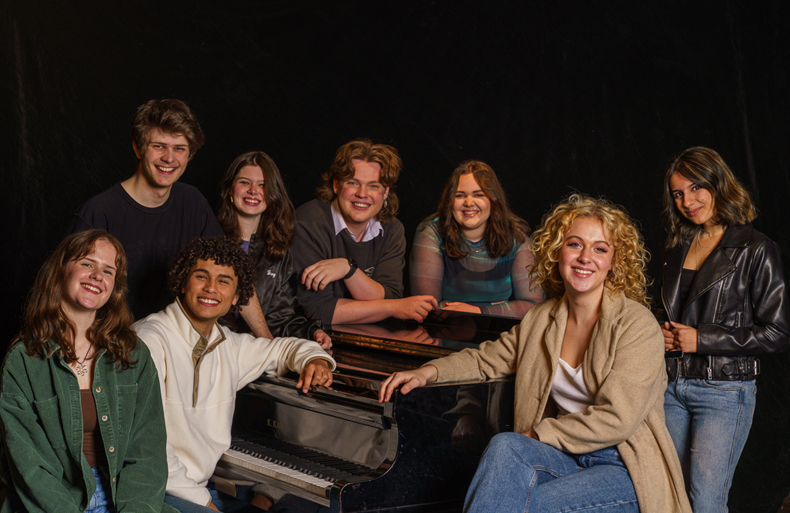
When Covid-19 shuttered schools, the school musical was among the first casualties. Just as sadly, shows that did go ahead were often reduced to a single camera livestreaming from the back of an empty hall.
At St Ives High School on Sydney’s Upper North Shore, the pandemic sparked something far more ambitious.
In 2017, award-winning Australian composer, writer and director Sean Peter answered the P&C’s call for someone to run the school musical. Productions of Bring It On and Matilda followed, building a strong bond of trust between Peter and the school.
So, when lockdowns hit and the government eased its rules around filming, Peter took a bold step. Rather than stage a musical with no audience to applaud the students’ hard work, he wrote a film.
Plan Bea had its first reading in late 2020, with much of the Matilda cast on board. But further lockdowns stalled production for most of 2021, and social distancing made for a strange shoot. Filming didn’t wrap until late 2022.
Signed by an international children’s media distributor, the film landed on Amazon and Apple this year. Recently, U.S-based Common Sense Media – the leading source of entertainment and technology recommendations for families – awarded Plan Bea four stars, calling it “edgy but heartfelt... filled with creativity and joy.”
Peter said the school musical is traditionally a place where kids who don't belong tend to fit in.
“The major theme of the film is the importance creating opportunities for Music, Performance and belonging – even when circumstances make it impossible,” Peter told The Educator. “We had one student who had ended up leaving school, but chose to stay for the duration of the movie’s production and turned up to every single shoot day.”
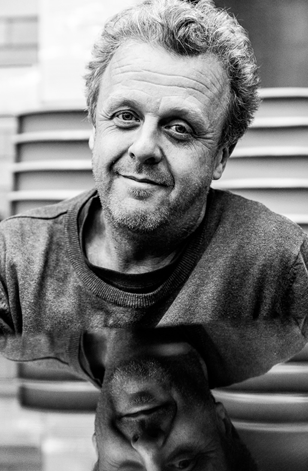
Peter said this was the student’s way of maintaining contact for an important group of peers, despite disengaging from formal schooling.
“I think the days of everyone watching the same thing and getting the same message are finished. There’s no one-size-fits all answer to solving student disengagement and belonging,” he said.
“There could be 2,000 small solutions that are specific to each school community. If there’s a common thread, it’s schools engaging in a meaningful way with their communities.”
Turning a crisis into a curtain call
Mark Watson, the now-retired former Principal of St Ives High School, said the Plan Bea project was “perhaps the most challenging period” he had faced as Principal of St Ives High School, and also in his entire career in education.
“My leadership team and I realised early in Covid’s spread in Australia that an upheaval in education was coming with serious impacts for students, staff and parents,” Watson told The Educator. “For education to remain relevant in everyone’s lives, we needed to take control, be innovative and run with the unpredictable.”
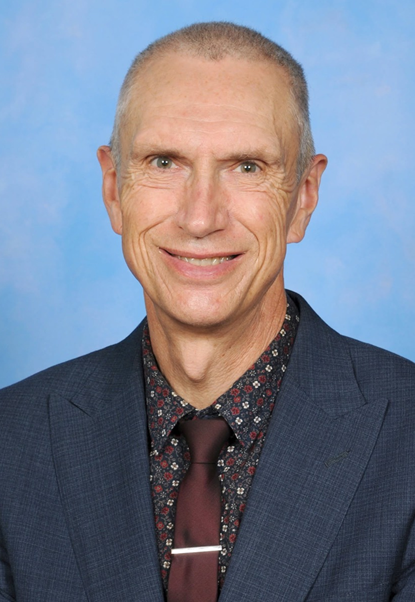
The leadership team pivoted the school to an online operation following its existing timetable, with staff and students already trained in the use of Google Classroom and Zoom. Meanwhile, the school’s welfare team followed up students who weren’t attending online lessons, while wellbeing days for students and forums for parents were also held, and the 2021 HSC trial exams were run online under elaborate security procedures the school devised itself.
“There were lots of unknowns and no guarantees that what we were doing would be successful, but we had to try new approaches,” he said. “We had to be flexible, listen to feedback and adapt our operation when required.”
So, when the school’s leadership team was approached by the parent and staff team developing its next school musical with the idea of making it a musical movie instead, Watson said he and his team were all ears.
“St Ives High School had a long tradition of outstanding musicals and we didn’t want Covid to destroy that,” he said. “We wanted a musical for our performance students. How to get around Covid was our dilemma.”
With an enthusiastic parent crew ready to make a movie, the cost and legal hurdles of musical rights loomed large, so Peter decided to write the musical and its score himself.
“We ran with it, one step at a time. It was clear the timeframe for the musical was going to be much longer than normal, allowing us to spread costs over a longer period,” Watson said.
“Covid had a devastating impact on the entertainment industry and as the project continued many of Sean’s contacts offered their services at a reduced cost which improved the quality of the final product.”
Watson said the school saw little downside in backing such an ambitious project.
“We had faith that the team could deliver, and if it came off, it would be a positive story born out of a negative period,” he said. “Even if it didn’t come to fruition, the students involved gained performance experience during the Covid period.”
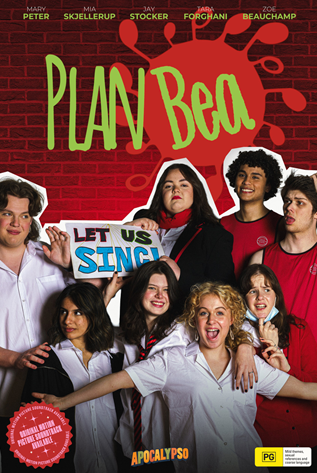
'Plan Bea was a public school story'
Peter said the project was always about giving every student a fair shot at something special.
“I'm a big believer in public education and equal opportunity, and so was the community who made this film. We all wanted our kids to have the kind of opportunity that usually comes with a price tag,” he said, adding that nearly every adult who worked on the film was a parent from the school.
“We couldn't have done it without the backing of our Principal, Mark Watson, our school liaison, Ruth Joynes, Kimberley Hely from the music staff, Cate Whittle from drama, and the P&C. They trusted us with something pretty ambitious and backed us all the way.”
Then more people started putting their hands up, said Peter.
“Parents with real industry experience gave up their time to lead departments,” he said. “Suppliers gave us rates they didn't have to, because they knew it was a public school project running on next to nothing. People understood what we were trying to do and wanted to be part of it.”
Peter said that, in his experience, public schools are particularly good at getting their communities on board with grassroots projects.
“There's something about a public school community that makes people want to pitch in. Everyone knows that if we don't make it happen, it just doesn't happen,” he said.
“I'm really proud of the film and I just want people to enjoy it for what it is. But I'm just as proud of everyone who made it. A lot of them started out as parents I barely knew and have ended up lifelong friends.”
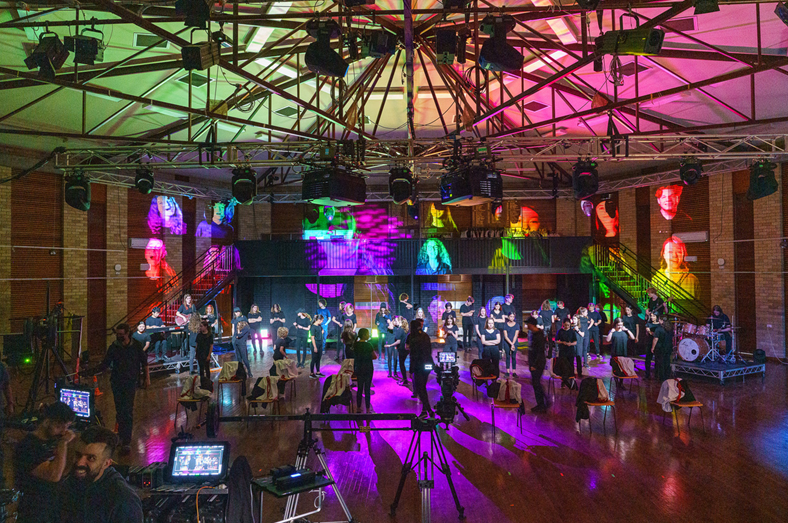
Watson said creative programs are essential if public schools are to hold their own against selective and private schools, and that letting them slide comes at a real cost.
“Public schools, especially local coeducational comprehensive ones, cater for all students within their drawing area,” Watson said. “They have to be able to offer all of the things specialist high schools and private schools offer such as academic programs, sporting development, learning support and performance programs for creative students.”
Watson said these programs are richer when they involve parents and the community.
“Creative and performance programs may be overlooked when there are budget constraints or a lack of available expertise,” he said. “Eventually the students and families that are able to will vote with their feet and move to schools that do offer these programs.”
Watson said the stakes are highest for those with no choice but to stay put.
“Students of families who are unable to move will miss out, and this would be a real tragedy when you consider the number of performers and creative types that have emerged from public education,” he said. “As it turned out, the students involved in this project had a very different experience from a traditional school musical.”
Instead of rehearsing a whole show for opening night, Watson said the students learned the craft of filmmaking, polishing and performing one scene at a time.
“The excitement of the cast the first time they viewed the entire movie was unbelievable. They could see how their parts made the whole, even before it had been through final production,” he said. “They had made a movie and it was going to be there for posterity.”
Watson said watching the students see themselves on the big screen was “overwhelming” – in a good way.
“They laughed at the jokes their characters made and were saddened at other moments,” he said. “I saw students who had been shy were now confident and enthusiastic.”
Watson said the sense of pride of the cast, their teachers and parents was “overwhelming” on the opening night of Plan Bea at Hornsby Event Cinemas.
“Parents couldn’t believe the creative talents their children had, but there it was right before their eyes. They were so proud and so happy,” he said. “Many of the students involved were now in their final years of school and brimming with confidence ready to take on the world.”
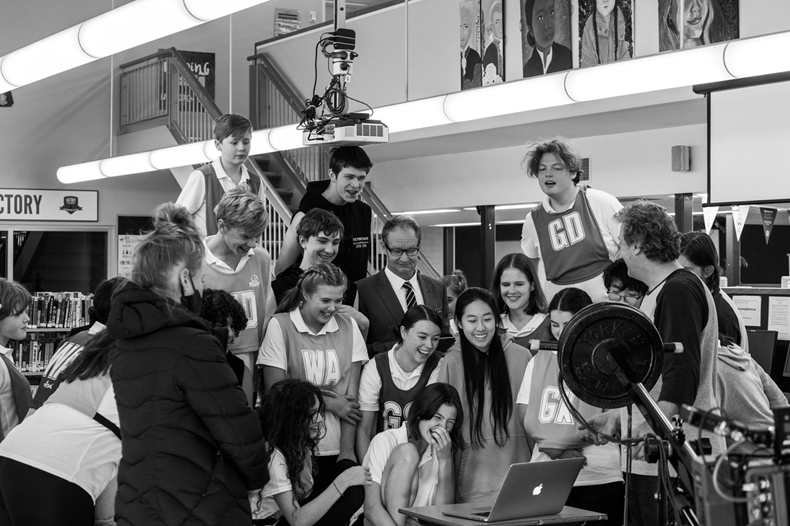
‘You will learn so much about yourself’
Aeryn Oborne, one of the students involved in making the film, said the project has helped her get more confident being in front of a camera and learning about the difference between theatre and screen acting.
When asked if a younger student at her school was on the fence about getting involved in something like this, Oborne said she would tell them to “definitely get involved”.
“You will make amazing connections with people and new friends that will stick with you for life,” Oborne told The Educator. “The special memories you will make will be unforgettable and you will learn so much about yourself. It’s also just so much fun to do something cool and different.”
Another student, B. Gluskie, said the project aided him in his experience with the process and structure of creating a film.
“I don’t think I would feel nearly as comfortable on other sets without the incredible experience offered by this project,” Gluskie said.
“I encourage other students to take the step and go for it. You’re young and the worst that could happen is you find out you don’t like it. You stand to gain so much that in my opinion you would be crazy not to take the opportunity.”
Mia Skjellerup said the project gave her the confidence to ask questions and be curious about the filmmaking process.
“So much of what I know and love about film as a medium now can be traced back to the things I learned on set; things I never would have learnt if I didn’t ask crew members about what they were doing.”