



For most students, technology is a useful extra in the classroom. For many autistic students, it can be the difference between being left on the sidelines and fully joining in.
Yet that reality sits awkwardly alongside the long-running screen time debate, which came to a head this month when federal, state and territory education ministers agreed to a “digital detox” restricting students' use of screens and AI.
So what does it all mean for autistic students, and the schools working hard to include them?
Support at the moment it's needed
On 27 November, Aspect will host an event at Microsoft Headquarters in North Sydney, bringing together education experts to explore practical applications of AI, personalised learning and assistive technologies to support Autistic students and inclusive classrooms.
One of the speakers at the event was Dan Hart, who previously led AI at the NSW Department of Education and developed NSW EduChat. Hart said personalised learning is a way to adapt to how an individual student learns, not just generate different content.
“Autistic students have diverse needs, and AI can offer patience, consistency and support at the moment it's needed,” Hart told The Educator. “It can break complex instructions into manageable steps, explain concepts in different ways, reduce cognitive overload and allow students to ask questions repeatedly without feeling self-conscious.”
Hart said a teacher with 25 students “simply cannot provide that level of individual attention every minute.”
“The opportunity is to give students greater independence while keeping teachers firmly in control of their learning.”
With education ministers moving to restrict screen time and wind back generative AI in classrooms, Associate Professor Harrison said the challenge for the new Taskforce will be ensuring autistic students who rely on these tools to access learning aren't left behind.
“I'd start by distinguishing between passive screen consumption and technology that genuinely supports learning and accessibility,” he said. “Blanket restrictions risk removing tools that help some students participate in education on equal terms.”
Hart said the rules should focus on purpose, outcomes and safeguards, with explicit provisions for students who benefit from assistive technology.
“Having led the development of AI for public schools, I've seen how important age-appropriate protections, teacher oversight and evidence-based evaluation are,” he said. “We should absolutely regulate AI use in schools, but based on the risks and benefits of specific applications, rather than treating all screen time or AI use as equivalent.”
Rethinking gaming as the villain
Another speaker was Associate Professor Matthew Harrison, University of Melbourne, who will address the event on the topic of how gaming can support communication, participation and belonging for Autistic students.
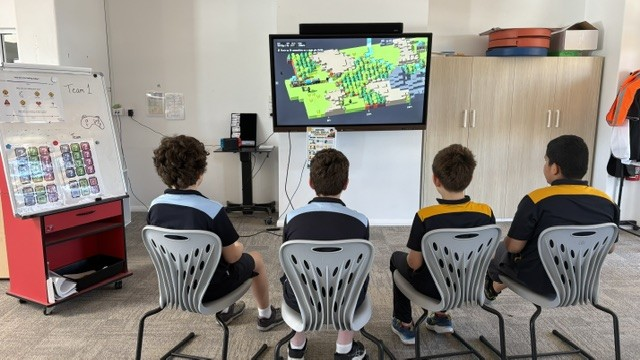
“As someone who loves both Minecraft and handball, I think we’re asking the wrong question when we make gaming the villain,” Associate Professor Harrison told The Educator. “For some autistic students, the unstructured playground can be a difficult, even unsafe, place to connect.”
Associate Professor Harrison said Minecraft offers “a shared world” where young people can build on their strengths and interests, and communicate in ways that work for them.
“It’s not about replacing handball or other social opportunities. It’s about creating a starting point for friendships,” he said. “Importantly, a well-facilitated Minecraft club also gives educators opportunities to support, supervise and understand social interactions that can be missed in the playground.”
Associate Professor Harrison said that as Australia’s ‘digital detox’ takes shape, Principals can support sensible screen time limits without sacrificing students’ right to social inclusion.
“The Disability Standards for Education require schools to address barriers to participation. I’d argue that includes opportunities to connect through strengths, shared interests and spaces where students feel safe,” he said. “The Disability Royal Commission documented the devastating consequences of bullying and exclusion.”
Associate Professor Harrison said schools need to think carefully about what they take away, and what replaces it.
“We cannot remove a young person’s safe space and simply tell them to make friends on the football field,” he said. “Our MRFF-funded research with the wonderful team at Aspect and Next Level Collaboration, nearing Week 20 data collection, is investigating what makes gaming groups genuinely inclusive.”
The case for ‘technodiversity’
Craig Smith, Technology and Innovation Manager at Positive Partnerships, said the biggest gains being seen from the use of AI with autistic students is with regards to executive functioning.
“By executive functioning, I am referring to the way that AI can summarise content, can help interpret information, and can scaffold and chunk classroom tasks into smaller, manageable pieces,” Smith told The Educator. “You would see students collaborating and talking with their devices, requesting visualisations of the projects they are working on, having the tools help with research.”
Smith said the other noticeable change is the way educators can now customise the very tools their students are using.
“No longer are we stuck with default apps – we are able to very quickly create custom software interfaces for our students to engage with,” he said. “This might include a personalised way for students to write, to create mind maps, to make art.”
Smith said student voice guides this work at every turn, and the ability to respond to students' needs in ways never before possible is one of the most exciting parts of AI in inclusive education.
“In inclusive and autistic education, we often talk about ‘neurodiversity’, about the benefits of taking a ‘biodiverse’ approach to the human mind – nature flourishes when you have a diversity of flora, and so too does human society benefit when you foster a diversity of minds,” he said, adding that education flourishes when “technodiversity” is encouraged.
“Rather than locking yourself into one set of tools for many different types of minds, we want a multitude of tools, all customisable, for the many varied students we work with every day. This is a pathway with AI that we are eager to keep building on.”
‘There should never be one set of rules that apply to everybody’
For autistic students who depend on a device to communicate or self-regulate, new screen limits could easily leave them feeling exposed in front of their peers. Smith said schools will need to think differently about how such limits are applied.
“This is where the conversation about technodiversity really comes into its own – there should never be one set of rules that apply to everybody,” he said.
“Digital technologies provide unparalleled ways for our students to organise their thoughts, to support their literacy needs; as well, these technologies literally give our autistic students a voice, a way to communicate with others.”
Smith said it can sometimes be presumed that there is a natural ‘baseline’ for how classrooms should operate, and that there is an equilibrium between offline and online technologies.
“To my mind, this baseline is a fiction often reinforced by a lack of understanding as to how new technologies like mobile tablets and AI can be successfully implemented in the education of our students,” he said. “If we see devices as rewards, or we see apps merely as opportunities to reinforce repetitious classroom tasks, we lose the creative potentials possible.”
Smith said a blunt approach to screen time risks unintended consequences for autistic students.
“For our autistic students, and for inclusive education at large, digital technologies become much more than an alternative way to think and work,” he said. “They become part of the very fabric that mediates their relationship with the world, and this is something that regulations like ’screen limits’ need to be very careful about interfering with.”
Start with the student
Kate Hughes is an educator at Aspect Riverina School in Albury, NSW. Asked what it looks like when gaming or assistive technology opens a door for an autistic student, the answer starts with a desire for connection.
“In the classroom, I see many Autistic students who want to connect with their peers and feel part of their school community,” Hughes told The Educator. “We support those social interactions by building on students’ strengths and interests and creating opportunities for connection.”
For some students, gaming provides a natural and motivating way to do this, Hughes said.
“This year Aspect has been working alongside the University of Melbourne on a program called Press B to Belong to better understand the role cooperative gaming can play in social connection and belonging for Autistic students,” she said. “The shared goals and predictable structure of gaming can take some of the pressure out of social interaction and give students a comfortable space to try new ways of interacting with peers.”
Alongside gaming, Aspect Riverina School explicitly teaches skills such as encouraging others, asking for help and working as part of a team.
“I’ve seen students become more confident, support their peers more independently and build stronger relationships and a greater sense of belonging,” Hughes said. “I think technology can play an important role in supporting Autistic students when it’s used with purpose and informed by evidence.”
Hughes said the most valuable lesson is a simple one.
“My advice to other teachers is to start with the individual student, their strengths and interests, and think about how technology can create meaningful opportunities for connection.”