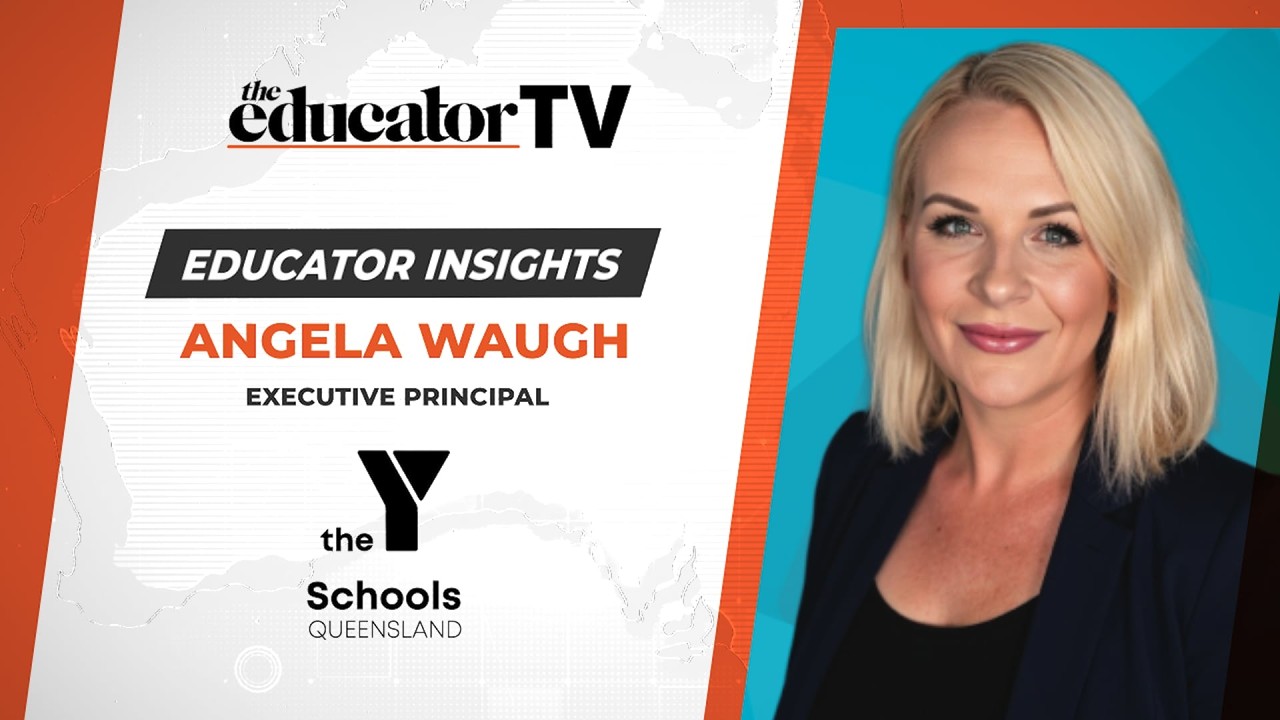
VIDEO: From good to great teaching: a leader’s playbook
In this interview, Amanda Schiavo, Director of Education at The Industry School and a 2026 Educator Hot List winner, reflects on leading across government, independent and Catholic schools, the lessons each sector taught her, and why balancing equity with excellence remains central to every decision she makes.
To view full transcript, please click here
Chapter 1: Introduction
0:00 Leadership is not about position or authority. It's about influence and service. Every young person, you know, they deserve access to high-quality teaching and meaningful opportunities.
0:21 Hello and welcome to The Educator TV.
0:23 I'm Kylie Spear, and joining me today is Amanda Skiavo, Director of Education at The Industry School. Amanda has been named as a winner of The Educator Hot List for 2026. Welcome to you, Amanda. A huge congratulations, and thank you so much for joining us today.
0:43 Thank you, Kylie. It's so good to be here.
Chapter 2: Leading Across Government, Independent and Catholic Schools
0:46 Well, firstly, Amanda, your career spans government, independent and Catholic schools. How has working across all three sectors shaped your leadership, and what's one lesson from each that you carry with you?
1:01 Yeah, that's a really great question. And I think working across all of those sectors has really reinforced for me that while schools may operate in different contexts, the fundamentals of high-quality education really remain the same across all of those.
1:16 So, what I've learned is that the most successful schools share a relentless commitment to high expectations, strong relationships, and a sense of purpose. And regardless of the sector, when students feel known, valued, and challenged, they really thrive.
1:31 So, those experiences have also taught me the importance of balancing equity with excellence. Every young person, you know, they deserve access to high-quality teaching and meaningful opportunities. And I think we need to recognize that different learners may need different pathways to achieve success.
1:58 And perhaps the biggest lesson that I've carried throughout my career is that culture underpins all of this. So, you can have the best curriculum, the best system initiatives in place, but that sustainable improvement only happens when people are united in a shared vision and a collective belief of what is possible for young people.
Chapter 3: What Instructional Excellence Looks Like in the Classroom
2:21 Instructional excellence is at the heart of your work. What does it look like in a classroom, and how do you help schools move from good teaching to great teaching?
2:33 So, for me, instructional excellence is not about a particular program or initiative. It is about what happens every day between a teacher and a learner.
2:49 Students know what success looks like.
2:52 Teaching is responsive to student needs, and every learner is actively engaged. There's also a strong sense of belonging, high expectations, and this relentless focus on the growth and development of the young person.
3:09 So, I think helping schools move from good teaching to great teaching starts with creating that shared understanding of what excellent practice looks like.
3:15 So, we do use evidence-informed frameworks, and we invest in coaching and professional learning and create opportunities for teachers to observe and have that professional dialogue with each other.
3:29 Amanda, you've helped set up new schools and lead curriculum rollouts across the state. What's the biggest challenge in building a school's culture from scratch, and how do you get staff on board with big curriculum changes?
Chapter 4: Building School Culture and Leading Curriculum Change
3:45 The biggest challenge, I think, is building that collective belief. So, when a school is established from scratch, every single interaction contributes to its culture.
3:53 So, staff are looking for things like clarity, consistency, and that shared sense of purpose that I keep referring back to. So, if people understand why their work matters, they're much more likely to commit to how it will be achieved.
4:09 So, I think that's a really important thing to think about when establishing a new school. The other thing, when establishing a significant change like a curriculum change, is to focus heavily on clarity around that vision.
4:25 So, at The Industry School, for example, our vision is to elevate industry careers and provide an education pathway for all industries.
4:32 So, when people can see how that curriculum connects to a meaningful purpose for young people, I think that engagement grows. And curriculum reform specifically, I think people need three things. The first one is a compelling rationale. So, why are we doing this?
4:47 Practical support. So, what is tangible that they can take with them? And confidence that they can succeed. So, having someone backing them with that change.
5:00 And I think that change then becomes most effective when educators feel like they're partners in the journey rather than the recipients of a direction.
5:09 Evidence-based practice is widely talked about, but it can be hard to put into action. How do you help principals and teachers turn research into everyday classroom decisions?
Chapter 5: Putting Evidence-Based Practice into Action
5:24 I think one of the misconceptions about evidence-based practice is that it requires teachers to become researchers.
5:33 And so, whilst professional reading is a big part of it, they don't actually need to be active researchers. In reality, it's about making informed decisions using the best available evidence to them.
5:48 So, my role is often translating some of that complex research into practical actions. So, teachers and leaders, they don't need a 50-page research paper. They need to understand what it means for tomorrow's lesson, for example.
6:06 So, I often ask a really simple question, and I guess it's: What does the evidence suggest will have the greatest impact on student learning? And from there, we help schools and students identify observable practices.
6:13 So, feedback is really important. How to implement these practices consistently and how to measure their impact. And getting that feedback not only from their colleagues but from the students that are engaged in their learning, I think, is a really important part of that.
6:28 And I think the key is making that research visible, as I've said, in everyday practice. But then, when the teachers and the leaders can see improved engagement, stronger outcomes for students, and increased confidence, evidence-based practice stops being a concept or something that's written in a paper and actually becomes part of the culture.
6:45 That makes perfect sense.
Chapter 6: What Great Coaching Looks Like
6:52 Amanda, coaching principals and teachers is a big part of your role. What does a great coaching relationship look like, and what growth in an educator has made you proudest?
7:06 Okay, there's a few examples there, quite a few I can talk about. But I think first and foremost, the best coaching relationship is built on trust, challenge, and a real, genuine curiosity.
7:15 I feel, or I believe, that a coach's role is not to provide all the answers. It's to create the conditions for people to discover their own solutions and build confidence in their own decision-making.
7:31 The most rewarding moments, if I think back, they've often not been the big achievements but the transformations in that belief in their decisions.
7:38 So, I've worked with educators who have initially doubted themselves, and then I've watched them grow into confident, effective leaders who inspire others.
7:46 I think what makes me the proudest is seeing those educators have a positive impact that goes beyond themselves.
7:55 So, when a teacher improves their practice, students will benefit. And when a principal grows as a leader, the entire school community benefits.
8:06 So, that ripple effect is incredibly powerful and one of the reasons why I love this work.
Chapter 7: Priorities for School Leaders and Advice for Emerging Leaders
8:13 Amazing. And finally, Amanda, looking ahead, what do you see as the most important priorities for school leaders in the next few years, and what advice would you give an emerging leader who wants to make a lasting impact?
8:30 I believe the most important priorities will be maintaining the high quality of teaching, strengthening student well-being, and ensuring that education remains relevant in a rapidly changing world. Young people need options in education, and I truly believe that. And they need a sense of belonging, aspiration, and confidence that what they're learning will help them navigate the future.
8:54 And I think school leaders have an important role. They are critical in creating these environments where both learning and well-being are valued equally. So, at The Industry School in particular, we've seen the impact of connecting education with industry pathways, and young people are therefore more engaged.
9:09 So, they can see their purpose and their learning are connected, and it's taking them to their future. So, my advice to emerging leaders is simple, I guess: stay focused on people, young people, and the people in your teams.
9:23 Leadership is not about position or authority. It's about influence and service. And so, I would say, listen deeply, remain curious, and keep the young people at the heart of what you do.
9:40 So, never lose sight of that purpose and why that work really matters. And if every decision that's made starts with what's best for young people, you'll create a legacy that lasts far beyond your role.
9:55 Beautifully said. Well, thank you so much for your time today, and congratulations once again, Amanda, on what is a clearly well-deserved accolade.
10:10 Thank you so much, Kylie, for the opportunity to talk to you about the work that I do. I couldn't have done it, though, without the support of my team at The Industry School. So, a big shout-out to my executive team and my colleagues, and also to my CEO, Lee Smith, whose confidence in me has also helped me to grow as a leader.
10:30 And thank you, of course, to our viewers for watching the latest episode of The Educator TV. We look forward to seeing you again soon.